

Empowering London’s Communities
Innovate Now with City Bridge Foundation
Impact and Learning Report
This is essential reading for dismantling funding barriers faced by Black-led charities. The report details how £15k unrestricted grants and intensive mentorship transformed 64 London-based organisations, boosting organisational health scores from 3.3 to 3.9/4 and leading to 83% reporting increased community impact within six months.
About Do it Now Now
Do it Now Now (DiNN) is a pioneering organisation dedicated to empowering Black-led charities, social enterprises, and grassroots organisations across the UK.
Contact us to find out more about what we are doing to challenge the status quo and increase opportunities for equitable outcomes in the UK’s Black community.

Executive Summary of Key Findings
Over 2.5 years, Innovate Now programme funded by City Bridge Foundation supported 64 Black-led charities and social enterprises in Greater London through a model combining trust-based grant funding of £15k per organisation, with tailored capacity building. This intervention targeted organisations at the ‘missing middle’ stage (income £30k–£150k), leading to measurable improvements in organisational health, leadership confidence, and ecosystem connectivity.
Core Impact:
Organisational Capacity Strengthened: Health Check scores rose from 3.3 to 3.9/4, with the strongest gains in Financial Management, Administration, and Programme Performance.
Sustainable Impact Scaled: 62% of organisations expanded teams; 83% reported increased community impact within six months.
Ecosystem Influence Expanded: Over 90% of leaders formed new partnerships, with over half explicitly aimed at advancing racial equity.
Key Programme Insights:
The integrated model of unrestricted funding, cohort learning, and Critical Friend mentorship proved essential.
Flexibility, such as the Fiscal Hosting mechanism, enabled the inclusion of high-potential organisations that were excluded by rigid criteria.
Holistic support addressing wellbeing, confidence, and advocacy was as critical as operational training.
Structural Barriers Identified:
Persistent gaps include the ‘project funding trap’, disproportionate compliance burdens, and a trust deficit in traditional funding, disproportionately affecting leaders with multiple marginalised identities.
Introduction
1.1 Programme Genesis and Strategic Vision.
Innovate Now is one of Do it Now Now’s 5 flagship programmes. Organise into levels, our programming is determined to support organisations as they graduate through the levels which begin at startup and zero income and extend to £1m in income. Interventions across the levels range from simple grants to repayable grants, blended finance loans, match trading and zero% interest financing.
Between 2023–2025, City Bridge Foundation funded 64 organisations to engage in the Level 3 programme. We targeted Black-led charities and social enterprises in Greater London, aiming to transition them from grant dependency to sustainable, community-rooted enterprise.
1.2 Purpose of this Report.
This report provides a cumulative, evidence-based analysis across three cohorts, assessing impact against KPIs, detailing programme evolution, measuring organisational ‘distance travelled’, surfacing structural challenges, and offering actionable recommendations.
1.3 Report Structure.
The report moves from cohort analysis to impact assessment, qualitative insights, and strategic recommendations, drawing on Health Checks, surveys, feedback, and case studies.
Cohort Profile and Selection
This section outlines the end-to-end journey of the Innovate Now programme across all three rounds funded by City Bridge Foundation, from initial outreach and application through to final selection and onboarding. It presents a consolidated view of the cohort demographics, the multi-stage selection process, and the key characteristics of the organisations that formed the three cohorts.
2.1 Cohort Profile
Innovate Now was explicitly designed as a central intervention within DiNN’s continuum of support, targeting organisations with annual incomes between £30,000 and £150,000. This financial threshold was set to identify organisations at a pivotal growth stage, beyond start-up but not yet at scale, where targeted grant funding and capacity-building could catalyse sustainable development.
Across Rounds 1–3, 64 organisations were onboarded, engaging 115 participants (typically founders, directors, or senior managers). These organisations represented a wide range of social mission areas, including employment and training, mental health and wellbeing, arts and culture, disability inclusion, racial justice, and community development.
The programme adopted an intersectional lens throughout, recognising that Black-led organisations are not a monolith. Many organisations were led by individuals holding multiple marginalised identities, including Black women, disabled leaders, LGBTQ+ individuals, and those with lived experience of the justice system or migration. This nuanced understanding allowed the programme to tailor support and surface systemic barriers compounded by intersecting forms of exclusion.
2.2 The Selection Funnel
The selection process was designed to be rigorous, transparent, and developmental, ensuring that funded organisations were both aligned with the programme’s objectives and ready to absorb and implement grant funding effectively.
Figure 1: Innovate Now Selection Funnel – Rounds 1–3.
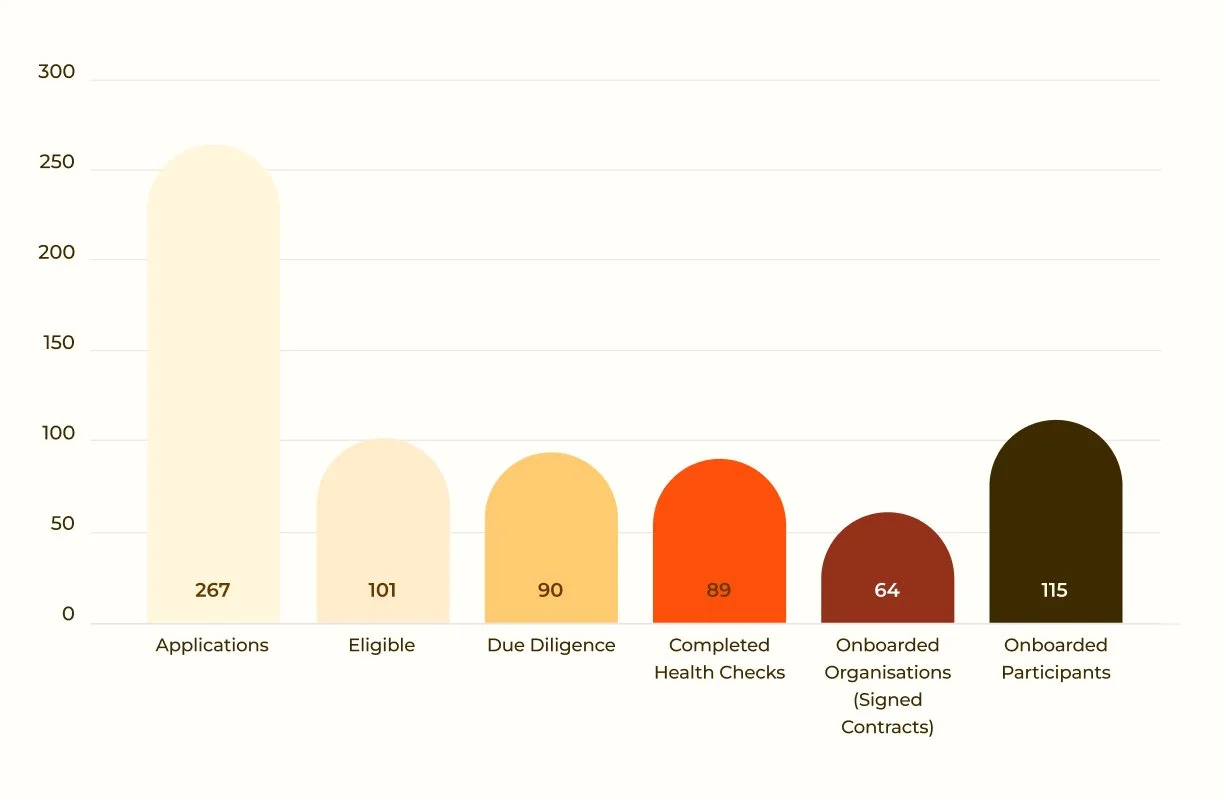
Phase 1: Outreach and Application: A multi-channel outreach strategy, including email campaigns, social media, partner referrals, and pre-recorded information sessions , clarified programme goals and eligibility, resulting in 267 applications.
Phase 2: Eligibility Screening: Applications were assessed against clear criteria: legal incorporation, annual income (£30k–£150k), Black-led leadership, Greater London operation, and a focus on income diversification. Of 267 applications, 101 met these criteria.
Phase 3: Health Check Assessments: Eligible organisations underwent a comprehensive Health Check to identify strengths and development areas across key organisational pillars. This tool evolved across rounds, expanding from six to seven themes and deepening assessment granularity. The baseline established a measurable starting point for tracking progress, with a post-programme check enabling impact evaluation.
Phase 4: Due Diligence: A forensic verification stage examined legal, financial, and safeguarding health across four pillars: Legal & Governance, Financial Health, Safeguarding & Operational Policies, and Operational Verification. This step ensured organisations were compliant, operationally sound, and capable of responsible grant management.
Phase 5: Proposal Development: Applicants articulated their enterprise projects, revealing strong thematic trends: a strategic shift toward earned income, digital enablement for scale, culturally informed value as an asset, reinvestment-driven sustainability, and pragmatic financial planning. This phase confirmed that selected organisations were strategic thinkers ready to build sustainable business models.
Phase 6: Grants Committee Review: A committee of internal and external experts conducted a holistic assessment of each shortlisted application, evaluating financial sustainability, organisational resilience, business model clarity, and ecosystem engagement. This integrative review balanced compliance with qualitative judgement to select organisations poised for transformative growth.
Adaptive Phase – Fiscal Hosting: To include high-potential organisations with non-standard legal structures, a Fiscal Hosting mechanism was developed in Round 2. This allowed DiNN to act as an intermediary fiscal sponsor, channelling funds through its charitable infrastructure while maintaining compliance. Seven organisations across Rounds 2 and 3 benefited from this flexible approach, widening access and enhancing equity.
Phase 7: Onboarding: Successful organisations signed grant agreements and nominated key team members (typically 1–3 individuals) to participate in workshops, Critical Friend sessions, and peer learning activities.
2.3 Evolution of the Selection Process.
A key learning from IN Round 1 was the sequencing of Health Checks and Due Diligence. In Round 1, Health Checks preceded Due Diligence, serving as both a diagnostic and a filter. For Rounds 2 and 3, these stages were conducted concurrently to streamline the process, while maintaining rigorous assessment.
The iterative refinement of the Health Check tool itself, informed by real-time feedback and organisational needs, exemplifies the programme’s commitment to adaptive, learning-centred design.
2.4 Geographic and Demographic Profile of Onboarded Organisations.
Understanding the geographic distribution and demographic composition of the Innovate Now cohorts provides critical context for the programme’s reach, relevance, and alignment with its mission to support Black-led organisations across Greater London.
The 64 funded organisations were spread across 18 London boroughs, reflecting a broad yet targeted engagement with communities where Black-led social enterprises are actively serving local needs.
Figure 2: Geographic Distribution of Onboarded Innovate Now Organisations.
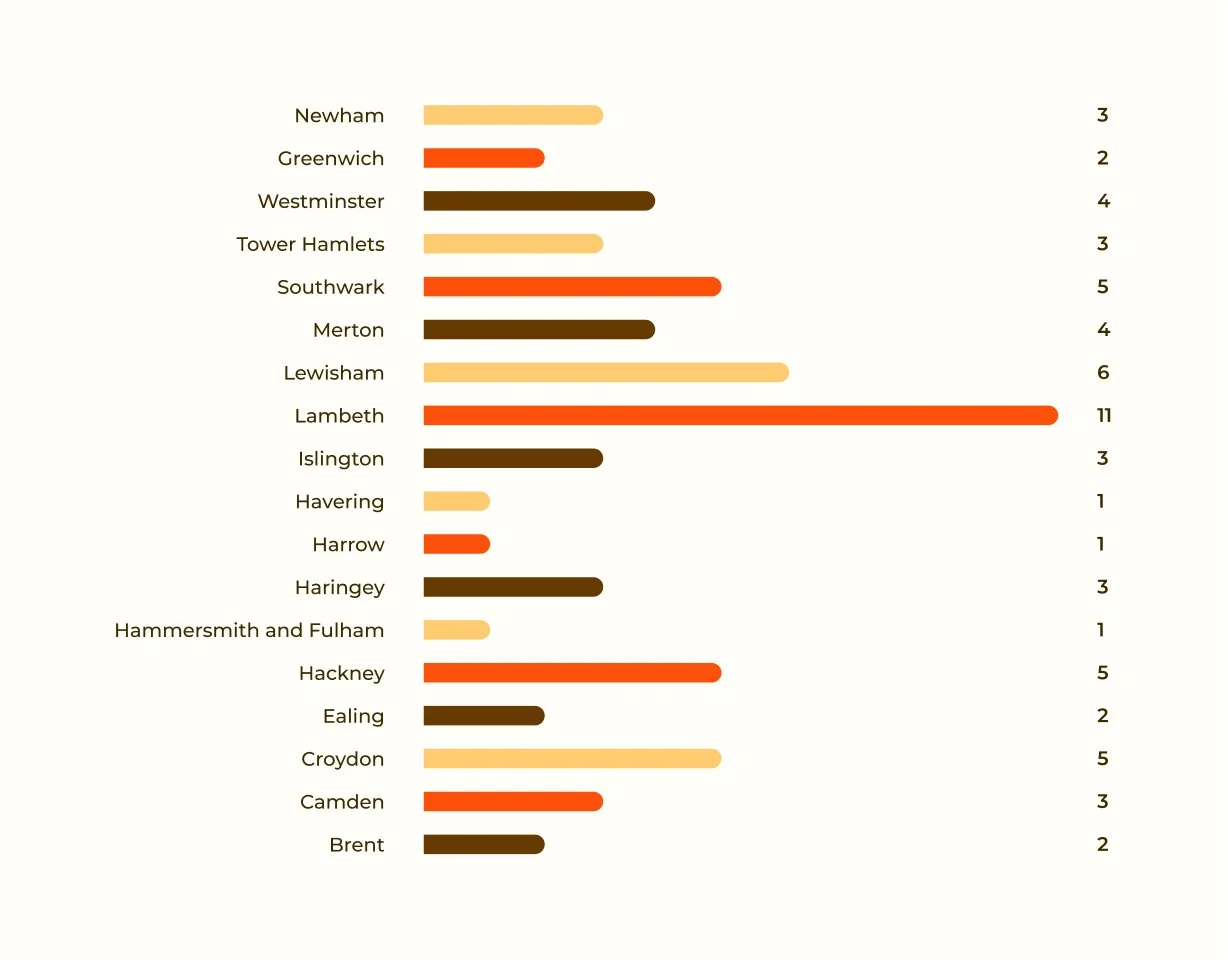
Lambeth had the highest concentration of funded organisations (11), followed by Lewisham (6), and a cluster of five organisations each in Croydon, Hackney, and Southwark. This distribution corresponds with areas of significant Black and Global Majority population density and reflects longstanding community-led activity in these localities.
For context, application numbers were even higher in several boroughs. For example, Lambeth generated the highest volume of applications (38), though not all met the eligibility or readiness thresholds. Similarly, boroughs such as Newham, Brent, and Greenwich saw lower conversion rates from application to award, pointing to potential gaps in organisational readiness or alignment with the programme’s specific income and capacity criteria.
2.5 Organisational Maturity: Years of Incorporation.
The funded cohort reflects a strategic focus on organisations beyond start-up but not yet at scale. The majority (56%) had been incorporated for 2–5 years, aligning with the programme’s Level 3 targeting. A further 22% were in the 6–10 year bracket, often facing second-stage scaling challenges, while 19% had over a decade of operation, typically well-rooted but navigating legacy systems or succession planning. Only two organisations were less than 2 years old, underscoring the emphasis on operational readiness.
2.6 Legal Form and Structural Readiness.
The cohort exhibited a strong preference for mission-locked legal structures. Two-thirds (66%) were Community Interest Companies Limited by Guarantee, reflecting a social enterprise orientation with clear asset locks. The remainder were split between Companies Limited by Guarantee (16%) and Charities/Charitable Incorporated Organisations (19%), indicating a mix of traditional non-profit models. This profile informed the programme’s emphasis on governance and income diversification.
2.7 Social Investment Experience and Financial Readiness.
Most organisations had limited exposure to repayable finance. Eighty-three per cent had received less than £10,000 in social investment, or none at all, highlighting a sector-wide reliance on grants. Those with larger prior investments (£50,000+) tended to be more established (incorporated for 6+ years) and closer to investment readiness. None of the organisations with prior investments of over £250,000 were funded, ensuring support was directed to growth-stage entities.
2.8 Annual Income Profile.
All 64 organisations fell within the programme’s target income band (£30k–£150k). The distribution revealed distinct profiles: 27% were in the £30k–£49,999 range (building operational consistency), 17% in £50k–£74,999 (transitioning to hiring and earned income), 27% in £75k–£99,999 (professionalising systems), 17% in £100k–£124,999 (scaling strategically), and 13% in £125k–£150k (preparing for investment readiness). This spread enabled tailored capacity building across maturity levels.
2.9 Team Size and Organisational Capacity.
Team sizes reflected lean, agile structures. Half of the organisations operated with 1–5 people, often founder-led and reliant on volunteers or freelancers. Thirty-eight per cent had 6–10 team members, indicating early specialisation, while only 13% had teams larger than 10, typically those in higher income brackets. Across all sizes, leadership layers (senior management and trustees) were substantial relative to core teams, highlighting the reliance on governance alongside operational leanness.
2.10 Team Demographic Makeup.
All organisations met the core criterion of over 50% Black team. Beyond this, rich intersectionality was evident: 36% had a majority of Global Majority (non-Black) team, 30% had majority-women teams, 13% included significant youth representation, and 6% had substantial disability or migrant representation. This demographic intentionality strengthens cultural competency and community trust but also surfaces unique wellbeing and bias challenges for staff.
2.11 Impact Areas.
The cohort’s work addressed clear community gaps. Employment, education, and training were the largest focus (42%), followed by mental health and wellbeing (19%), arts, culture, sport, and faith (13%), and racial justice and equity (8%). The remaining 18% spanned health, disability, financial inclusion, climate, and family support, demonstrating the breadth of Black-led social enterprise and its response to both urgent and systemic needs.
2.12 Primary Demographics Served
Organisations primarily served marginalised communities, with a strong youth focus: 44% served children under 18 and 31% young people aged 18–25. Eighty-one per cent served global-majority and ethnic-minority communities overall. Other key groups included people with mental health needs (11%), women (9%), refugees (6%), and ex-offenders (5%). Lower service levels for physically disabled people (3%) and those on very low incomes (2%) indicate potential areas for future targeted support.
Overview of the Programme.
The programme was a structured capacity-building initiative that supported social enterprises and mission-driven organisations through a series of cohort-based learning journeys. Across three distinct rounds, INR1, INR2, and INR3, spanning from October 2024 to November 2025, the programme delivered tailored training, one-to-one mentorship, and expert-guided reflection to strengthen organisational viability, operational systems, and financial readiness.
Each cohort followed a phased pathway, beginning with foundational business modelling, moving through operational and financial management, and culminating in investment readiness and sustainability planning. Recognising participants' demanding schedules, most group sessions were held in the evenings, typically from 6–8 pm, to maximise accessibility and engagement. One-to-one Critical Friend sessions and Office Hours provided personalised support, while reflective and celebratory gatherings fostered community and consolidation of learning.
3.1. The Innovate Now Journey Across Three Cohorts.
Below is a narrative summary of the key activities, sequencing, and thematic focus across the three cohorts.
Cohort 1 (Oct 2024 – Jan 2025): Launched with a Welcome Induction, followed by Business Viability Assessment and Business Modelling. Systems and Processes and Financial Management training built operational resilience. Three Critical Friend sessions provided tailored guidance. The cohort closed with a Reflection Session and Celebration Dinner.
Cohort 2 (Nov 2024 – Mar 2025): Introduced new external facilitators and included a Corporate Sponsorship session. Financial Management was led by an external specialist. Critical Friend meetings spanned November to March, with Office Hours supporting each module. The cohort concluded with a Reflection Session and Celebration Dinner in March 2025.
Cohort 3 (Apr 2025 – Nov 2025): Began with onboarding in April and a Welcome Induction in May. Added a new module on Building Financial Stability and emphasised income diversification. Critical Friend sessions were scheduled for July–August, with a mid-programme Grant Manager Call to align on administrative matters. The cohort ended with a Reflection Session in August and extended post-programme support through November.
3.2. Key Performance Indicators.
The programme was designed with clear delivery milestones and participant engagement targets to ensure both reach and depth of support. This section presents the Key Performance Indicators (KPIs) achieved across the three cohorts, structured to reflect the programme’s phased delivery:Grant Funding and Onboarding, Capacity Building and Support, and Completion and Sustainability.
These KPIs capture not only quantitative outputs, such as the number of sessions delivered and participants engaged, but also the qualitative intensity of support, exemplified by the high volume of one-to-one Critical Friend sessions and tailored capacity-building. The data is disaggregated by cohort (INR1, INR2, INR3) to illustrate the programme's evolution and scaling over time.
The following sections detail performance across each stage, accompanied by data visualisations and narrative insights that highlight achievements, adaptations, and lessons learned throughout the delivery period.
3.2.1 Stage 1: Pre-Programme – Grant Funding and Onboarding
This initial stage covered participant selection, baseline assessment, and onboarding, which are critical for setting clear expectations and understanding each organisation’s starting point.
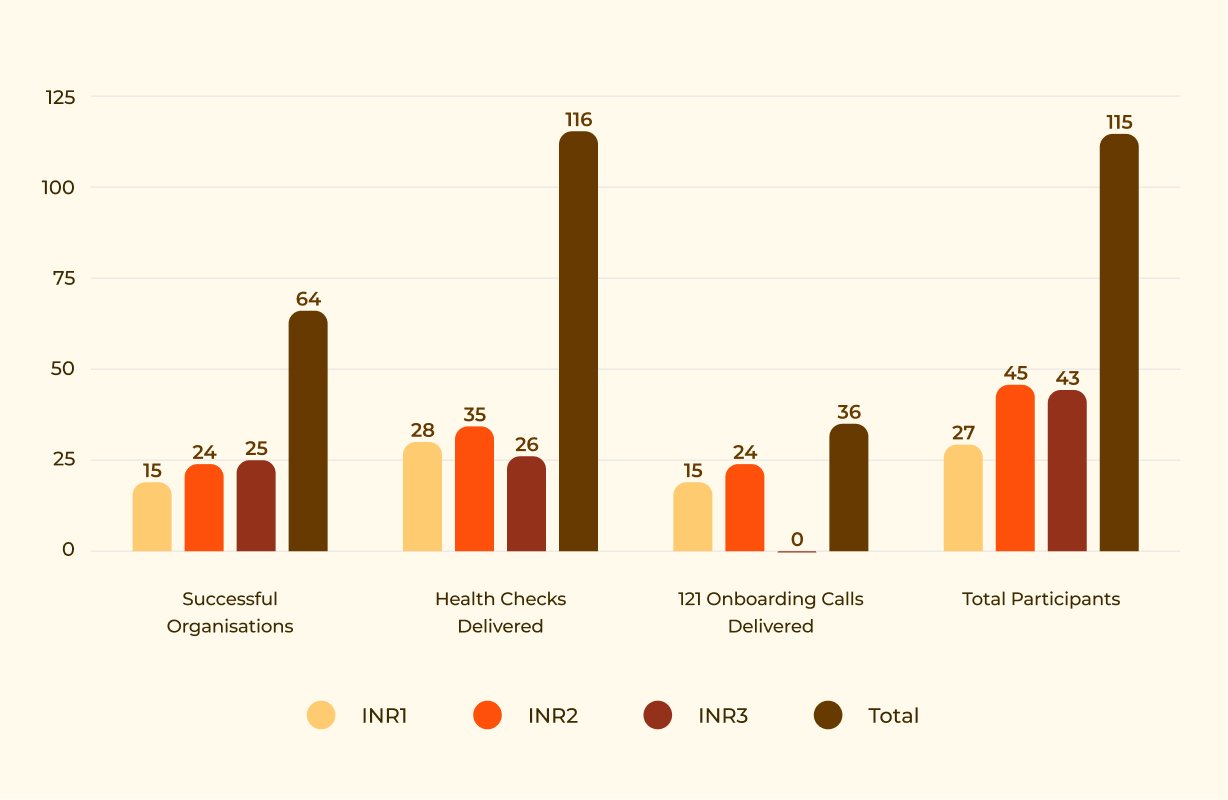
The pre-programme stage demonstrates the programme’s deliberate scaling from 15 organisations in Round 1 to 25 in Round 3. A total of 64 organisations were successfully onboarded, supported by 116 baseline Health Checks that established measurable starting points for organisational development. In earlier rounds, personalised onboarding calls were standard; by Round 3, enhanced guidance and resources reduced the need for one-to-one support, allowing the delivery team to focus capacity on core activities while providing ad-hoc assistance as needed. This adaptation reflects a maturing model that increased efficiency without compromising support quality, with 115 participants ultimately engaged across the three cohorts.
3.2.2 Stage 2: Capacity Building and Support.
This stage encompassed the core delivery of workshops, training, and personalised support to strengthen organisational capacity, financial management, and investment readiness.
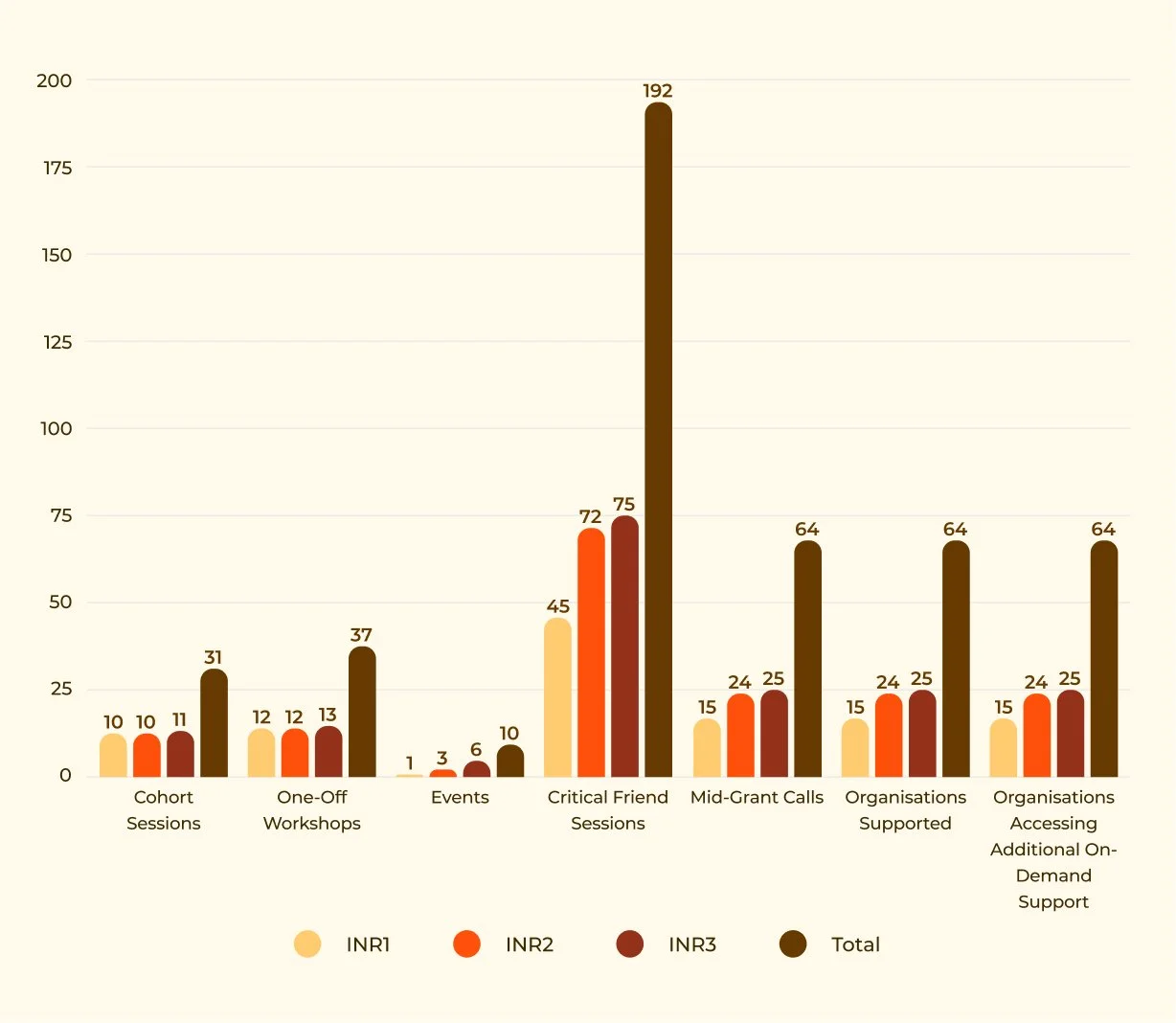
Stage 2 delivered intensive, scaled support across all cohorts. The volume of Critical Friend sessions (192) increased directly with cohort size, ensuring each organisation received three tailored mentorship sessions. The expansion of ‘wider skills sessions’ from 1 in INR1 to 6 in INR3 reflects an adaptive, cross-cohort model responsive to emerging needs.
3.2.3 Stage 3: Post-Programme – Completion and Sustainability.
This final stage focused on closing the grant cycle, assessing organisational progress, and equipping organisations to sustain their growth beyond the programme.
Stage 3 – Post-Programme Completion & Sustainability KPIs
All 64 organisations across all rounds completed the following:
End-grant calls delivered
End-of-grant health checks delivered
Personalised capacity building including critical friend, and peer-to-peer learning opportunities
Stage 3 confirms successful completion and emphasises sustainability. End-grant calls and health checks, served as both accountability touchpoints and reflective planning sessions, often consolidated into single, efficient meetings in later cohorts. The data confirms 100% engagement with the integrated support model, equipping organisations with the tools and confidence for their next developmental phase.
Pre- and Post-Programme Survey Analysis: Measuring Organisational "Distance Travelled".
4.1 From Pre-Programme Challenges to Programme Outcomes.
To assess change across core outcome areas, surveys were administered to participants at two points: upon programme onboarding (Pre-Programme Survey) and within six months of programme completion (post-programme). A 70% response rate across both survey rounds provides a reliable evidence base for measuring organisational progress in leadership confidence, partnership development, financial growth, and wellbeing.
M&E Outcome Framework and Corresponding Analysis Sections.
Organisational Capacity:
Core Issue Identified at Pre-Programme: Fragmented resources, ad-hoc planning, and limited governance.
Programme Aim: Build confidence & capability in strategic planning, financial sustainability, and governance.
Sub-Thematic Analysis: 4.2 Organisational Capacity
Partnerships & Collaboration:
Core Issue Identified at Pre-Programme: Informal, limited networks lacking strategic alignment.
Programme Aim: Increase the number and quality of partnerships formed.
Sub-Thematic Analysis: 4.3 Partnerships & Collaboration
Financial Growth:
Core Issue Identified at Pre-Programme: "Project funding trap," low innovation & investment readiness.
Programme Aim: Increase income generation & readiness for social investment.
Sub-Thematic Analysis: (Integrated into Section 4.2)
Leadership & Wellbeing:
Core Issue Identified at Pre-Programme: High burnout, unsustainable practices, and limited influence.
Programme Aim: Improve personal well-being & strategies for sustainable leadership.
Sub-Thematic Analysis: 4.4 Leadership & Wellbeing
4.2 Organisational Capacity & Financial Growth.
The programme strengthened strategic behaviours and leadership confidence necessary for sustainable growth. Self-reported survey data show participants’ evolution in managing scale, leading complex processes, deepening impact, and driving systemic change.
Before the programme, many organisations operated with lean teams and limited strategic confidence. Post-programme, 62% expanded their teams, and 83% reported increased community impact within six months. Leaders’ confidence in hiring and management rose from 53% to 81%, and their confidence in navigating complex processes such as mergers and acquisitions increased significantly.
A decisive shift occurred in equity leadership. While 84.6% were aware of DEI issues pre-programme, over half (55.1%) of leaders reported actively contributing to new DEI policies, pledges, or practices within six months. The nature of contributions demonstrated sophisticated leadership: 60.5% were active participants, and 32.6% were facilitators leading the process.
Impact delivery was also consolidated into more defined strategic tiers. The most significant shift was the more than doubling of organisations in the “medium impact” tier, indicating a strategic recalibration toward defined service models and efficient resource allocation. Concurrently, leader satisfaction with their organisation’s size and impact underwent a pronounced positive shift, with high satisfaction surging from 34.2% to 53.8%.
4.3 Partnerships and Collaboration.
4.3.1 Quantitative Growth in Diverse Partnerships.
Before the programme, a solid majority of participants (66.35%) were already engaged in diverse partnerships, indicating a foundation for collaborative practice. However, the depth of these networks varied significantly, 26.92% maintained 3–5 partnerships, 23.08% had more than five, and a nearly equal proportion (23.08%) reported having no diverse alliances. A further 26.92% had only 1–2 connections, suggesting that for many, collaborative networks were nascent or limited.
Post-programme, the data reveals a powerful acceleration in partnership formation. The proportion of leaders establishing new diverse partnerships surged to 91.03%, a dramatic increase from the 66.35% involved in any partnerships prior. The group with no partnerships shrank dramatically from 23.08% to just 5.63%, effectively bringing almost all organisations into the collaborative fold. Growth was most concentrated in the 1–2 new partnerships range (52.11%), with a significant cohort (29.58%) establishing 3–5 new partnerships and 12.68% forming more than five.
4.3.2 Strategic Focus and Equity Integration.
At the pre-programme stage, collaboration was driven by strong mission-aligned motivations, but existing partnerships lacked a consistent, explicit focus on structural racial equity. The primary perceived barriers were access to funding opportunities (58.65%) and the need for better networking platforms (25%). Partnerships were often formed opportunistically rather than as part of a deliberate equity strategy.
Post-programme, the data reveals a profound strategic refinement in partnership quality. Among the leaders who formed new partnerships, 91.55% reported that at least one of their new collaborations explicitly sought to increase racial equity. Furthermore, 59.15% established 1–2 equity-seeking partnerships, and 32.4% formed three or more, indicating that racial equity became a dominant, intentional criterion for new collaborations.
The perceived effectiveness of these equity-focused initiatives is strikingly high: over 80% of respondents rated them as moderately to extremely effective, with over half (51.28%) in the “Very” or “Extremely” effective categories. Leaders credited targeted training on partnership strategies (34.04%) and direct networking opportunities with institutional representatives (29.79%) as key drivers of this shift.
4.3.3 Institutional Engagement and Confidence Building.
Before the programme, a majority of participants (59.62%) had existing partnerships with established institutions across Local Government (32%), Universities (21%), Arts & Culture (18%), and the Corporate Sector (15%). However, satisfaction with these relationships was low: 41.35% were dissatisfied, and only 11.54% were highly satisfied, highlighting a gap between access and effective leverage.
Post-programme, the overall proportion with institutional partnerships increased marginally to 60.26%, but the key transformation was in confidence and perceived impact. Of those who formed new institutional links, 93.62% rated the programme’s impact on their ability to do so as moderate to high, with nearly half (46.81%) attributing high impact.
High confidence in cultivating and maintaining institutional partnerships rose to 56.58%, while low confidence was eliminated entirely (0%). Showing a fundamental shift in self-perception, from feeling peripheral and under-resourced to seeing themselves as competent, strategic partners capable of navigating and sustaining institutional relationships.
4.3.4 Community Influence and Governance Engagement.
Pre-programme, a significant minority of leaders (34.62%) held formal positions on influential committees and boards, Local Government Strategic Panels (36%), Infrastructure Bodies (33%), and Youth Foundations (17%), demonstrating recognised expertise and structural access to community power. However, membership alone did not equate to active influence.
Post-programme, over 70% of leaders reported actively participating in or observing equity discussions with local officials within six months. More importantly, 53.85% moved beyond observation to “actively participated,” signalling a transition from seated representation to contributing agency in policy and strategy conversations.
4.4 Leadership and Wellbeing.
The programme’s impact extended beyond organisational capacity to address the personal well-being and long-term sustainability of leaders. By focusing on role clarity, self-efficacy, and expanded professional influence, the programme supported a shift from overburdened, isolated leadership models toward more confident, connected, and resilient practices.
4.4.1 Leadership Role Clarity & Expansion.
During the pre-programme evaluation stage, 92.31% of participants were already in leadership roles, but their responsibilities were often unsustainable. Common titles included Director (39%), Founder (28%), and CEO (26%), with leaders juggling operational execution (39%), strategic vision (25%), financial management (24%), and people management (19%). This “chief everything officer” model limited delegation and increased the risk of burnout.
Post-programme, 28.21% of leaders secured new external leadership roles within six months, primarily in social enterprises (50%), charities (45%), and local government (18%). This expansion reflects increased delegation, professional recognition, and integration into wider networks, reducing isolation and supporting more sustainable leadership models.
4.4.2 Confidence in Leadership Capacity & Future Attainment.
Before the programme, while 82.69% of leaders saw moderate future potential, underlying self-doubt was evident: 41.35% were only tentatively confident, and 17.31% reported low confidence in their leadership trajectory.
At the post-programme stage, high confidence (8–10) surged to 57.14%, while low confidence more than halved to 7.14%. This strengthening of self-efficacy is critical for reducing stress, supporting career sustainability, and building the resilience needed to navigate leadership challenges.
Health Check Assessments
A comparative analysis of independently administered Health Checks across the Innovate Now programme provides a longitudinal assessment of organisational capacity from Baseline (pre-intervention) to Follow-up (post-programme) stages. The Health Checks serve as the programme’s central diagnostic and developmental tool, offering a rigorous evidence base for measuring growth, resilience, and the impact of tailored capacity-building support.
The assessments were conducted by independent freelance specialists with strong backgrounds in entrepreneurship, academia, and organisational development. All three specialists followed a strict research-based methodology and shared scoring framework to ensure consistency, objectivity, and comparability across organisations and time points.
Purpose and Strategic Role of the Health Checks.
The Health Checks were designed with three core objectives:
To establish a baseline diagnostic of organisational strengths and areas for development across seven key thematic areas critical to sustainability and impact.
To inform and personalise capacity-building support, ensuring interventions were targeted, relevant, and responsive to each organisation’s unique needs.
To measure developmental progress and evaluate the effectiveness of the Innovate Now programme in strengthening Black-led charities and social enterprises.
The assessment framework is structured around seven interdependent thematic areas, each representing a critical pillar of organisational health and sustainability:
Governance: Assesses leadership structures, strategic direction, board effectiveness, legal compliance, and succession planning. This theme ensures organisations are led with clarity, accountability, and long-term vision.
Administration: Evaluates operational policies, procedural systems, IT infrastructure, and data management. This area focuses on the foundational systems that enable efficiency, compliance, and scalability.
Human Resources: Examines workforce planning, recruitment, diversity and inclusion, performance management, compensation, and staff development. This theme ensures organisations can attract, retain, and grow talent in line with their mission.
Financial Management: Reviews financial systems, budgeting, forecasting, internal controls, reserves policies, and income diversification. This area is critical for financial resilience, transparency, and long-term sustainability.
Organisational Management: Focuses on strategic planning, operational effectiveness, stakeholder engagement, communication, and adaptability. This theme links day-to-day operations with long-term strategic goals.
Programme Management: Assesses how organisations design, deliver, and adapt their programmes to meet community needs, with emphasis on co-creation, inclusivity, and responsiveness.
Programme Performance Management: Evaluates monitoring, evaluation, learning (MEL) systems, impact measurement, data utilisation, and continuous improvement practices. This area ensures organisations can demonstrate and enhance their impact.
Evolution of the Health Check Tool.
The Health Check tool underwent refinement between Innovate Now Round 1 (INR1) and Rounds 2–3 (INR2, INR3), informed by direct learning from the inaugural cohort. This evolution ensured the tool became more granular, actionable, and closely aligned with programme objectives.
A key enhancement was the introduction of a dedicated ‘Administration’ theme, recognising the foundational importance of operational policies, technology systems, and data management in enabling organisational efficiency and scalability. Existing themes were also expanded and refined: ‘Operational Management’ was broadened to ‘Organisational Management’ to incorporate strategic planning and internal coherence, while ‘Project Management’ was redefined as ‘Programme Management’, with greater emphasis on community-centred design and long-term impact. Sub-themes across Governance, Financial Management, and Human Resources were deepened to better assess succession planning, income diversification, reserve policies, workforce planning, and performance systems.
These revisions ensured the tool more explicitly assessed readiness for income diversification, social investment, and sustainable community impact, core objectives of the Innovate Now programme. For INR1 organisations, the baseline assessment used the original tool, while the post-programme assessment applied the revised version. For INR2 and INR3 organisations, the enhanced tool was used at both baseline and post-programme stages, ensuring consistency and enabling a richer longitudinal dataset for comparison.
Methodology: Focus on Funded Organisations.
This analysis focuses on the 64 organisations awarded grants across Rounds 1–3, as they fully participated in the capacity-building programme and have pre- and post-intervention data available.
Cohort Breakdown:
INR1: 15 Organisations
INR2: 24 Organisations
INR3: 25 Organisations
Assessment Points:
Baseline Health Check: Conducted before or at the start of programme engagement.
Post-Programme Health Check: Conducted after the completion of capacity-building support.
The analysis employs a mixed-methods framework:
Quantitative Comparison: Tracking score changes across the seven thematic areas to identify trends, improvements, and persistent challenges.
Qualitative Insight: Integrating narrative feedback, case examples, and organisational reflections to contextualise numerical data and highlight the human impact of the programme.
5.1 Governance
Quantitative Overview.
Aggregated scores across the five Governance sub-themes show clear improvement from Baseline Health Checks to Follow-up Health Checks, reflecting strengthened organisational leadership and systems.
Figure 3: Average Governance Scores.
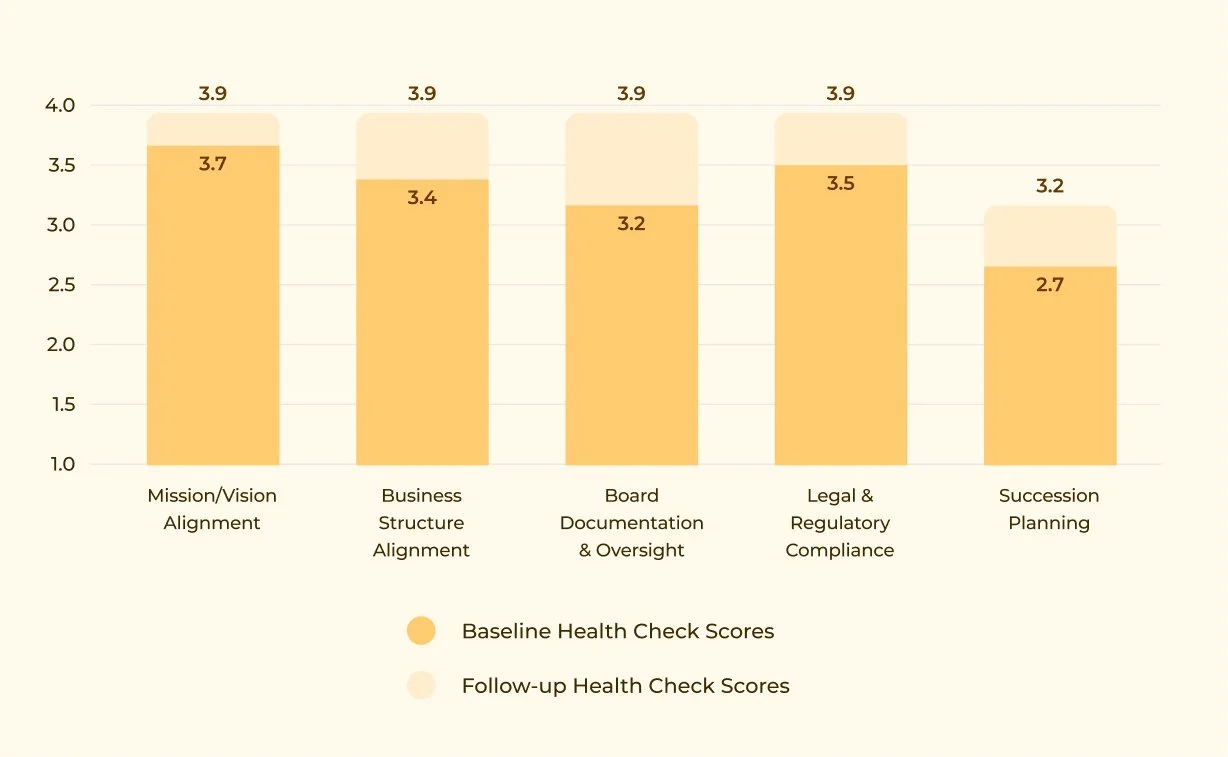
The most substantial gains were in Board Documentation & Oversight (+0.7) and Business Structure Alignment (+0.5).
Mission/Vision Alignment remained consistently high, reflecting a strong foundational clarity from the outset.
Succession Planning, while showing the most tremendous numerical improvement (+0.5), remains the lowest-scoring area in both rounds, indicating it is a complex, longer-term developmental challenge.
The overall combined average rose from 3.3 to 3.8, signalling a significant strengthening of governance maturity across the cohort.
Qualitative Analysis.
1. Mission/Vision Alignment (3.7 to 3.9).
Baseline Health Checks: Most organisations demonstrated clear, lived-experience-driven missions, often rooted in founders' personal journeys (e.g., supporting Black boys, addressing racial inequality in sport, empowering Somali Muslim families). Communication was usually informal (WhatsApp groups, regular check-ins) but deeply embedded in daily operations.
Follow-up Health Checks: Post-programme, mission alignment became more strategically embedded and regularly reviewed. Several organisations reported refreshing their mission/vision statements for the first time in years, developing 5-year plans, and integrating mission into formal business planning. Communication became more structured through monthly newsletters, team meetings, and digital hubs (Microsoft Teams, Google Workspace).
"Our vision goes beyond a statement; it’s a lived experience throughout the organisation." – Follow-up Health Checks.
The slight score increase reflects a shift from implicit, passion-driven alignment to explicit, system-supported alignment, with mission now regularly referenced in strategy sessions and reporting.
2. Business Structure Alignment (3.4 to 3.9).
Baseline Health Checks: Structures were often informal, founder-led, and reliant on volunteers/freelancers. Many had boards that were "advisory in name only" or met irregularly. Some organisations operated dual entities (e.g., a foundation and a trading arm) without clear operational boundaries.
Follow-up Health Checks: Significant formalisation occurred. Organisations moved from ad-hoc to regular board meetings (monthly/quarterly), clarified directorial responsibilities, and established clearer operational tiers (e.g., executive teams, youth advisory boards). Several began structural transitions (CIC to CIO/charity) to enhance funding eligibility and governance.
"We’ve restarted bi-weekly meetings and are working on key documents... This has given us a much stronger footing." – Follow-up Health Checks.
The +0.5 score jump aligns with tangible moves towards purposeful structuring, separation of strategic vs. operational roles, and intentional board engagement.
3. Board Documentation & Oversight (3.2 to 3.9).
Baseline Health Checks: Documentation was often inconsistent, policies existed but were sometimes generic, inaccessible, or not regularly reviewed. Board oversight varied widely, with some boards deeply involved and others largely passive.
Follow-up Health Checks: Improvements in policy currency, accessibility, and board engagement. Organisations implemented digital repositories (Google Drive, shared drives), established formal review cycles (annual/biannual), and boards became more active in financial oversight, risk management, and strategic decision-making.
"Our board is now meeting more frequently... They challenge, steer and hold me to account on finance, staffing and safeguarding." – Follow up Health Checks.
The most significant score increase (+0.7) reflects a cultural shift toward accountability, in which boards moved from a passive advisory role to an active, governance-focused partnership with leadership.
4. Legal & Regulatory Compliance (3.5 to 3.9).
Baseline Health Checks: Most had basic compliance covered (accountants, company filings), but gaps existed in specialist areas: HR policies, safeguarding details, data protection, and insurance. Reliance on external professionals was common but not always proactive.
Follow-up Health Checks: Compliance became more systematic and anticipatory. Organisations appointed dedicated compliance leads, used external HR agencies, conducted regular policy training, and integrated legal reviews into project cycles. Several secured pro bono legal support.
"We complete an annual summer review of all policies... Each document is date-stamped upon review." – Follow-up Health Checks.
The improvement reflects a shift from reactive compliance to embedded compliance management, reducing operational risk and building funder confidence.
5. Succession Planning (2.7 to 3.2)
Baseline Health Checks: This was the weakest area. Many organisations were highly founder-dependent, with succession seen as a distant concern. Comments like "the organisation will fold if I leave" were not uncommon. Interim cover was often informal.
Follow-up Health Checks: While still evolving, conscious planning increased. Organisations identified second-in-command staff, began cross-training, documented processes, and in some cases, founders deliberately stepped back to test systems. However, formal, written succession plans remained rare.
"I’ve identified someone who could cover 2–3 days a week if I stepped back, but the board hasn’t vetted them yet." – Follow-up Health Checks.
The +0.5 improvement indicates a growing awareness and initial steps toward sustainability, but scores confirm this remains a developmental frontier requiring longer-term support.
Key insights.
From Founder-Led to Team-Based Governance: Baseline Health Checks were characterised by passionate, founder-centric leadership. Follow-up Health Checks show a marked shift towards distributed leadership, with clearer delegation, defined roles, and empowered second-tier management.
Increased Strategic Formality: Informal, reactive governance gave way to scheduled reviews, strategic planning cycles, and formalised reporting to boards, a sign of growing organisational maturity.
Intentional Structural Evolution: Multiple organisations are actively reconsidering their legal form (CIC vs. CIO/charity) to align with long-term sustainability and funding strategies, indicating proactive strategic thinking.
Persistent Vulnerability in Succession: Despite progress, reliance on founder vision and networks remains a systemic risk. Succession planning is more discussed but not yet robustly implemented.
Diversity and Lived Experience as Governance Assets: Across both rounds, boards and leadership teams reflect the communities served, embedding lived experience into decision-making, a consistent strength of the cohort.
5.2 Administration.
Quantitative Overview.
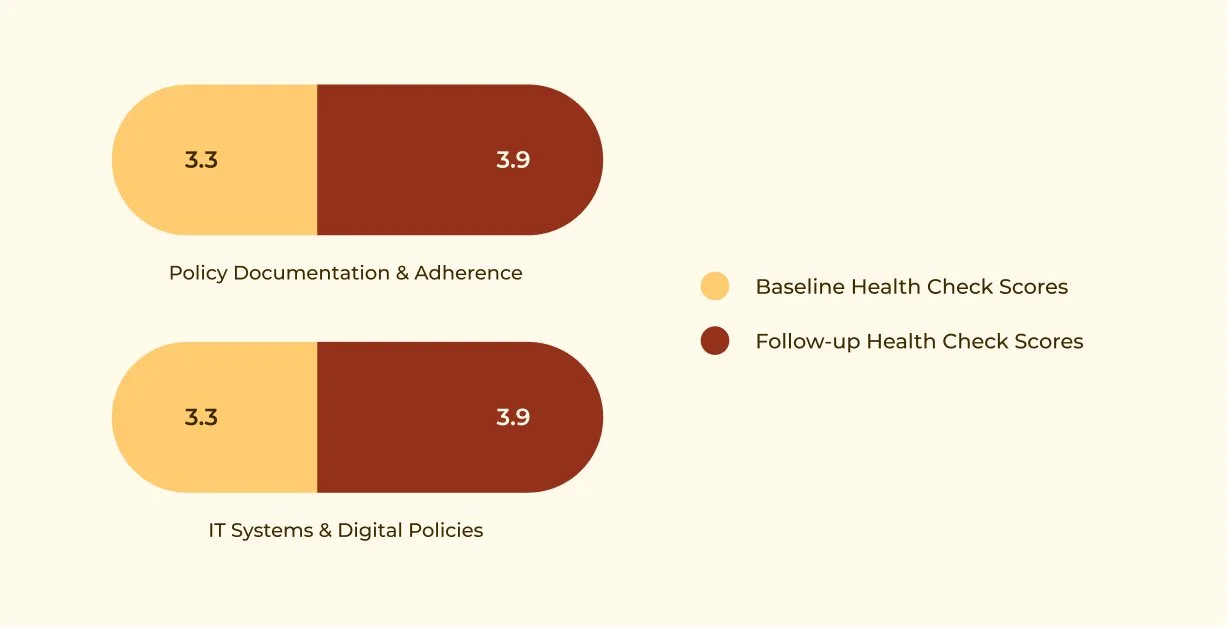
Administrative systems were significantly professionalised, moving from informal, paper-based processes to digital-first operations with clear policies and integrated IT frameworks.
Figure 4: Average Administration Scores.
Key Trends.
Holistic and Identical Gains: Both Policy Documentation & Adherence and IT Systems & Digital Policies showed identical, significant gains of +0.6 points, indicating balanced and comprehensive administrative development.
Overall Leap in Operational Maturity: The combined average rose sharply from 3.3 to 3.9, signalling a marked shift from informal, reactive operations to structured, system-supported administration.
Qualitative Analysis.
1. Policy Documentation & Adherence (3.3 to 3.9).
Baseline Health Checks: Policy frameworks were often patchy, generic, or inconsistently applied. Many organisations relied on uncustomised templates, and adherence was variable, particularly among freelancers and volunteers. Safeguarding, data protection, and HR policies existed but were not always regularly reviewed, easily accessible, or embedded in daily practice. Induction and appraisal systems were frequently ad hoc. One organisation noted, “We have policies, but freelancers do not always follow them.”
Follow-up Health Checks: A profound shift occurred from a policy existence to a systematic policy culture. Organisations moved from storing policies on personal drives to establishing centralised digital hubs with version control. They introduced mandatory, tracked training on safeguarding and data protection. Crucially, policies became integrated into operational routines through structured induction checklists for all staff and volunteers, ensuring key documents were received and acknowledged before any engagement with beneficiaries. This professionalised approach is exemplified by a youth empowerment charity that migrated all policies to a secure, tiered-access hub and implemented a digital tracking system for training completion, elevating its score from 3 to 4. Similarly, a community sports club evolved from paper-based consent and informal WhatsApp briefings to a digital volunteer handbook and induction portal, with role-specific agreements and centrally monitored DBS status.
“We now have a full set of reviewed policies, all stored centrally and shared during induction. Our team knows where to find them and why they matter.” – Follow-up Health Checks.
2. IT Systems & Digital Policies (3.3 to 3.9).
Baseline Health Checks: IT use was fragmented and relied on consumer-grade tools such as personal email, WhatsApp, and basic spreadsheets. Clear digital policies on data security, access permissions, or software use were rare. Systems were rarely integrated, creating data silos and inefficiencies. As one organisation admitted, “We use WhatsApp for everything, it’s quick, but we know it’s not secure for sensitive info.”
Follow-up Health Checks: Organisations professionalised their digital infrastructure with strategic intent. There was a widespread shift from makeshift tooling to integrated, business-grade platforms such as Microsoft 365 and Google Workspace. Specialist software for finance, project management, and CRM was adopted. Critically, this was underpinned by the development of clear digital policies on data classification, access, and cybersecurity, often accompanied by staff training. A training CIC, for instance, transitioned from a precarious setup of personal emails and paper forms to a fully integrated Microsoft 365 environment with cybersecurity training and seamless digital workflows, improving its score from 2.5 to 4. An environmental hub replaced a chaotic patchwork of spreadsheets and WhatsApp groups with Google Workspace for Business and a volunteer management CRM, co-creating social media and data policies with its team.
“We’ve moved to SharePoint for all document storage, with tiered access. Everyone is trained on our data policy, and we use Teams for internal comms.” – Follow-up Health Checks.
Key insights.
There was a decisive shift across the programme. In Baseline Health Checks, operations were heavily reliant on physical documents and informal messaging. By Follow-up Health Checks, integrated digital workspaces, automated workflows, and cloud-based collaboration became the norm. For example, a community heritage group moved from storing all participant forms in filing cabinets to using digital registration forms that auto-saved to a secure drive, drastically cutting admin time and improving data accuracy.
Administration evolved from a tick-box exercise to a framework for proactive risk mitigation. Regular, scheduled policy reviews replaced static documents. Mandatory training with digital sign-offs became common, and clearer accountability structures, such as quarterly compliance checklists reviewed by the board, ensured policies remained live tools for governance.
Management of non-salaried staff transformed from an informal, variable process to a structured, equitable system. Organisations developed comprehensive volunteer handbooks, clear role descriptions, and digital onboarding packs. The shift from verbal agreements and lost paperwork to signed role agreements and centralised digital records for DBS checks and training expiry dates enhanced both safety and operational reliability.
Technology adoption became strategic, directly supporting organisational scaling. Several organisations used the programme to audit their tech stack and invest in systems like CRMs for stakeholder management and project management tools for delivery coordination. This allowed them to automate routine tasks (like newsletter mailings) and free up capacity for core mission work.
Persistent Challenges
Resource Constraints: Investment in premium software or dedicated IT support remains a barrier for some organisations with limited unrestricted funds.
Variable Digital Literacy: Differing levels of comfort with digital tools across teams necessitate ongoing, tailored training and support to ensure full system adoption.
Policy Fatigue: A minority of organisations noted the risk of document overload, where an abundance of policies could paradoxically reduce engagement and understanding if not communicated and implemented effectively.
5.3 Human Resources Management.
Quantitative Overview.
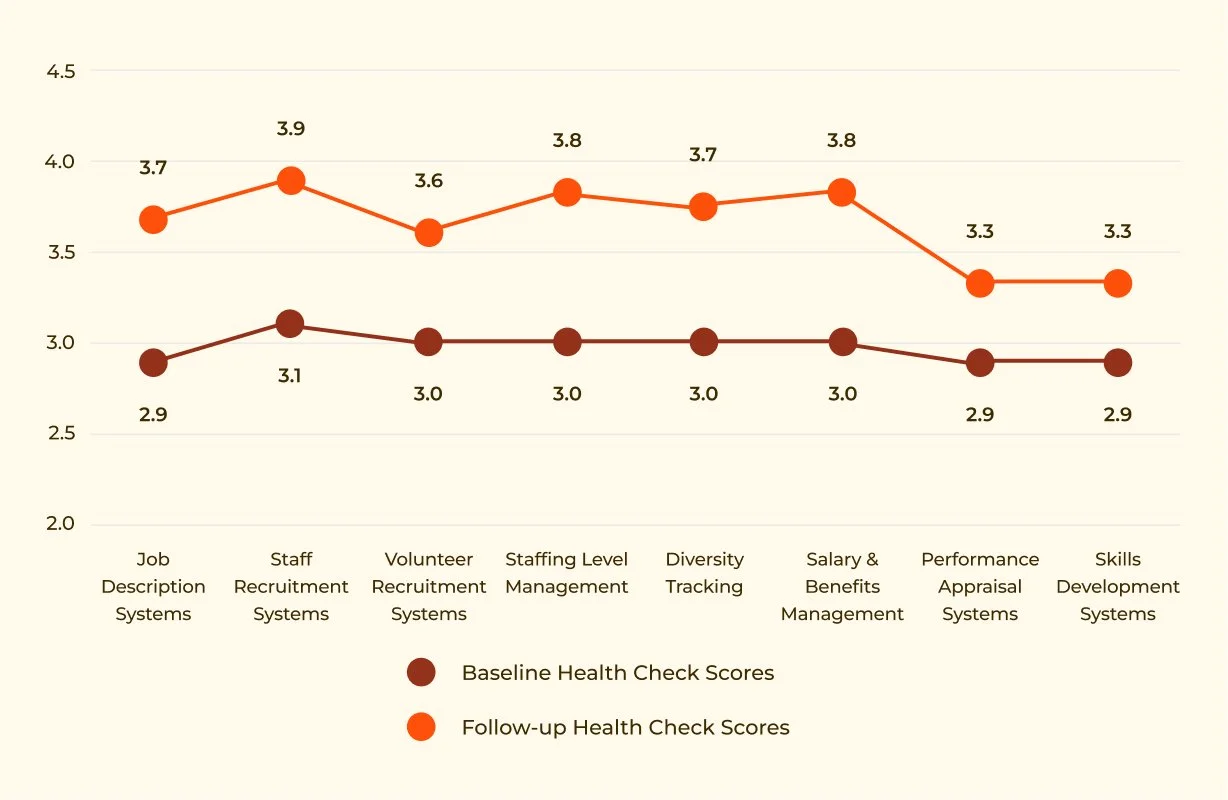
People management evolved from relational and informal to structured and strategic, with strengthened recruitment, diversity tracking, and performance systems.
Figure 5: Average Human Resources Scores.
Key Trends.
Broad-Based Gains: All eight sub-themes showed positive movement, with increases ranging from +0.4 to +0.8.
Strongest Improvements in Foundational Systems: The most substantial gains were in Staff Recruitment Systems (+0.8) and Staffing Level Management (+0.8), indicating a strategic focus on building robust hiring and workforce planning capabilities.
Developmental Systems Show Progress: Performance Appraisal and Skills Development Systems showed more modest but essential gains (+0.4 each), suggesting these areas, while advancing, are at a later stage of institutionalisation.
Overall Leap: The combined average rose from 3.0 to 3.6, marking a critical shift from informal, reactive people management towards structured, strategic HR practice.
Qualitative Analysis.
1. Staff Recruitment Systems (3.1 to 3.9).
Baseline Health Checks: Recruitment was predominantly informal and network-driven. Processes relied heavily on "word of mouth," "referrals," and community networks like WhatsApp groups, with one organisation noting, “We advertise, but with the Somali community, word of mouth is best.” Advertisements, when used, were often on free social media platforms. Formal interviews, documented checks, and structured panels were uncommon. For instance, a youth development organisation (Baseline Health Checks Score: 2) recruited entirely through the founder's personal Instagram stories, with no application form or process to verify professional history. Similarly, an arts organisation (Baseline Health Checks Score: 3) relied on a "pool of creative professionals" and found formal processes "time-consuming."
Follow-up Health Checks: Recruitment was markedly professionalised, moving from closed networks to open, structured systems. Organisations widely adopted formal platforms, implemented structured interview panels with scoring matrices, and introduced systematic pre-employment checks. The youth development organisation that once used Instagram stories (Baseline Health Checks Score: 2) now publishes formal role descriptions, uses sector job boards, and runs a two-stage panel interview process, achieving a Follow-up Health Checks Score of 4. The arts organisation (Baseline Health Checks Score: 3) progressed to using blind shortlisting on dedicated arts boards and trained its trustees on unconscious bias, also reaching a Follow-up Health Checks Score of 4. This collective shift is captured in the Follow-up Health Checks sentiment: “We now have a clear recruitment policy. All roles are advertised publicly, shortlisted candidates are scored by a panel, and we complete all necessary pre-employment checks.”
2. Staffing Level Management & Salary/Benefits (3.0 to 3.8 & 3.0 to 3.8).
Baseline Health Checks: Workforce planning was often reactive and funding-led, with staffing levels adjusted based on "available budget/revenue." Salaries were frequently set through informal "discussions," with limited benchmarking, and few were formal London Living Wage employers. A community-focused CIC exemplified this, scoring 2 for Staffing and 2 for Salary. It had no staffing plan, hired freelancers on a per-project basis with no overview of total capacity, and some staff were paid below the London Living Wage, according to individual discussions with the founder.
Follow-up Health Checks: Organisations became strategic in aligning human resources with organisational goals. The community CIC that scored 2 in both areas now operates with an annual staffing plan aligned with projected income, has formally committed to the London Living Wage, and uses a clear, sector-benchmarked pay scale for all roles, achieving Follow-up Health Check scores of 4 for both Staffing and Salary. This reflects the broader move towards strategic workforce planning, as noted by a Follow-up Health Checks leader: “We have a workforce plan for the next 18 months, linked to our strategy. Our pay policy ensures we meet the Living Wage and benchmark all roles annually.”
3. Diversity Tracking (3.0 to 3.7).
Baseline Health Checks: Diversity was often seen as a natural by-product of the mission, "our team reflects our community", with little active tracking. Data collection, if it happened, was usually for funder reports and not used internally for strategy. Some organisations were hesitant, with one noting they didn't want to be "overly rigid." A health advocacy organisation (Baseline Health Checks Score: 3), for example, stated that its workforce reflected its community but collected no structured data on characteristics like gender or disability, treating diversity as an assumption rather than a measured metric.
Follow-up Health Checks: There was a clear shift from passive assumption to active, data-informed intentionality. Organisations implemented structured, anonymous diversity monitoring forms with opt-out options and began using the insights to guide strategy. The health advocacy organisation (Baseline Health Checks Score: 3) now embeds diversity monitoring in all recruitment and annual staff surveys, with its board reviewing the aggregated data to identify representation gaps and tailor future outreach, achieving a Follow-up Health Checks Score of 4.
4. Performance Appraisal & Skills Development Systems (2.9 to 3.3 & 2.9 to 3.3)
Baseline Health Checks: These were the weakest areas. Appraisals were often "informal," "on the go," or based on ad-hoc feedback. Skills development was opportunistic or non-existent due to a perceived lack of "resources and capacity." A community sports club typified this: Baseline Health Checks Scores of 2 for Appraisal and 1 for Skills, with feedback on coaches gathered only from participants and parents, no structured one-to-one meetings for staff, and no budget or process for professional development.
Follow-up Health Checks: The introduction of scheduled, structured feedback and growth cycles signalled the start of a more strategic approach to staff development. Organisations began linking appraisal outcomes directly to identified training needs. The sports club (Baseline Health Checks Scores: 2 & 1) now conducts bi-annual formal appraisals for all lead coaches using a standard form. It has created a dedicated training budget, partnered with a national body to offer subsidised qualifications, and achieved Follow-up Health Checks Scores of 4 for Appraisal and 3 for Skills. This evolution towards integrating performance and growth is summarised in the Follow-up Health Checks insight: “We now have quarterly check-ins and an annual appraisal that links directly to a personal development plan.”
Key insights.
At the Baseline Health Checks, human resources were often characterised by informal, instinct-led management, as evidenced by verbal agreements, recruitment through closed networks, and a reliance on referral-based hiring. For example, one small CIC recruited freelancers solely through “encouraging referrals” and operated “no formal appraisal system.” Similarly, volunteers and freelancers were frequently onboarded with minimal formality; one community hub reported having “no staff on payroll” and provided only informal “induction days.”
By the Follow-up Health Checks, a clear shift toward professionalisation and structured processes was evident across the cohort. Documented processes, open advertising, and structured performance cycles became standard. The previously mentioned CIC developed formal role descriptions, advertised on specific platforms, and introduced a probationary review process. Likewise, organisations professionalised their management of flexible workforces: the same community hub created detailed volunteer role packs, implemented digital DBS tracking systems, and introduced mandatory safeguarding briefings for all non-permanent staff.
Persistent Challenges.
The Developmental Gap: While foundational systems saw substantial gains, embedding a mature culture of continuous performance management and career development requires ongoing effort and resources.
Tension between Formality and Culture: Some organisations expressed concern that over-formalisation could compromise the agile, mission-driven culture they valued. Balancing structure with warmth remains a key consideration.
Funding Dependence: The ability to implement ideal HR practices, such as placing all core staff on PAYE with generous development budgets, remains tightly linked to securing stable core funding.
5.4 Financial Management.
Quantitative Overview.
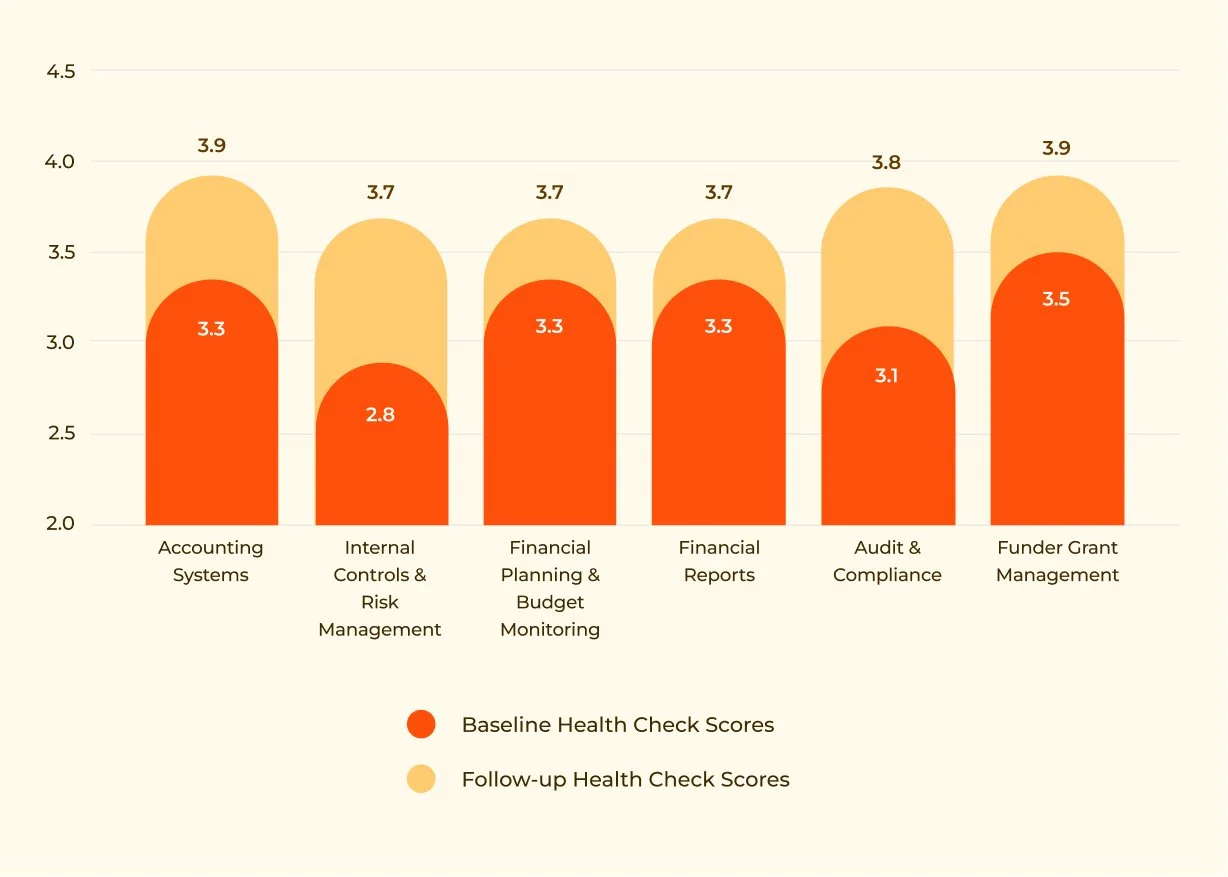
Financial practices shifted from basic bookkeeping to proactive stewardship, with enhanced controls, planning, and readiness for audit and investment.
Figure 6: Average Financial Management Scores.
Key Trends.
Universal Improvement: All six sub-themes showed positive gains, with increases ranging from 0.5 to 0.9.
Closing the Control Gap: The most substantial leap was in Internal Controls & Risk Management (+0.9), moving from the weakest area in Baseline Health Checks to a position of strength in Follow-up Health Checks.
Solidifying Core Systems: Accounting Systems and Funder Grant Management already have relative strengths in Baseline Health Checks and have advanced to become highly established practices (both at 3.9).
Holistic Advancement: The overall combined average rose from 3.2 to 3.8, signalling a marked shift from basic, often reactive financial tracking towards integrated, proactive financial management.
Qualitative Analysis
1. Internal Controls & Risk Management (2.8 to 3.7)
Baseline Health Checks: Organisations often had minimal formal controls, with bookkeeping managed manually via spreadsheets, little to no reserves, and financial oversight resting heavily on founders. One organisation noted, “Founder manages books using a spreadsheet… currently has no policy on reserves and currently has £756.” Risk discussions were irregular and rarely integrated into strategic planning.
Follow-up Health Checks: There was a transformational shift towards formalised safeguards and proactive risk planning. The implementation of dual- or multi-signatory approvals for payments became commonplace. Organisations established or significantly strengthened reserves policies, with many moving from zero or minimal reserves to holding 3–6 months of operating costs. Financial risk was increasingly discussed at board level and integrated into strategic planning.
“We have a reserves policy set at a minimum of three months… Internal controls include trustee scrutiny, separation of duties, and written approvals.” – Follow-up Health Checks.
2. Accounting Systems (3.3 to 3.9) & Funder Grant Management (3.5 to 3.9).
Baseline Health Checks: Financial systems ranged from manual spreadsheets and paper ledgers to basic software use, often managed by founders or external accountants with limited integration. Several organisations reported reliance on Excel, with one noting, “The founder undertakes bookkeeping but cannot use spreadsheets so prone to errors.” Tracking multi-funder grants was challenging and often done via separate spreadsheets.
Follow-up Health Checks: Widespread adoption and proficient use of dedicated accounting software (Xero, QuickBooks) became the norm, replacing or complementing manual methods. This enabled better integration between general accounting and funder reporting. Organisations improved their ability to code transactions to specific grants, enabling them to generate accurate compliance reports directly from their systems.
“We use QuickBooks… which gives the directors clear, up-to-date reports… and makes it straightforward to download what funders ask for.” – Follow-up Health Checks Organisation.
3. Financial Planning & Budget Monitoring (3.3 to 3.7) & Financial Reporting (3.3 to 3.7).
Baseline Health Checks: Planning was often reactive and project-driven, with budgets tied to specific grants and limited forward forecasting. One leader reflected, “Financial planning is more reactive than proactive—very ad hoc and flexible style… we would like more forward planning, plan for 3 years ahead, but this is not always possible.”
Follow-up Health Checks: Organisations developed more forward-looking financial planning, often linked to multi-year strategies. The introduction of regular (monthly/quarterly) management account reviews became standard practice, allowing for proactive budget monitoring and early identification of funding gaps. Financial reporting evolved from a compliance exercise to a key internal management tool.
“We produce monthly management accounts… We’ve become much more strategic about the kinds of contracts and funding we take on.” – Follow-up Health Checks Organisation.
4. Audit & Compliance (3.1 to 3.8)
Baseline Health Checks: Audit processes were often unclear or not discussed. For smaller organisations, the concept of an audit was distant, with assessors noting a lack of clarity on how tests were undertaken. There was limited mention of systems to address findings.
Follow-up Health Checks: Awareness and preparedness for audit increased significantly. Many organisations that had undergone audits reported using the findings to improve systems. There was a greater emphasis on maintaining an “audit-ready” state through organised documentation, clear trails, and robust underlying systems. Organisations now articulate a proactive stance: “We are audit-ready and administratively strong, having worked with funders… who require ongoing compliance checks,” and have implemented systematic responses: “If audit findings arise, we will track them in a simple action log… and report progress to the directors’ meeting.”
Key Insights
From Manual to Integrated Systems: Baseline Health Checks featured a mix of manual bookkeeping and basic software. Follow-up Health Checks saw widespread adoption of cloud accounting platforms, often coupled with external expertise, improving accuracy and freeing founder capacity.
Embedding Financial Governance: Financial oversight evolved from resting with a single founder to featuring increased trustee/board engagement, regular finance reporting at meetings, and the establishment of formal finance sub-committees.
Building Systemic Resilience: The most significant gains were in internal controls and reserves policies, indicating a cohort-wide move to institutionalise financial safeguards and create buffers against volatility.
Persistent Challenges
Capacity and Expertise: While systems improved, some organisations still lack in-house financial expertise, relying on overstretched founders or variable-quality external accountants.
System Integration: For some, tracking multi-funder grants with complex requirements within a single accounting system remains a technical challenge.
The Sustainability Journey: Diversifying income and building substantial reserves remain long-term goals. The tension between delivering mission-critical services and generating surplus income persists.
5.5 Organisational Management.
Quantitative Overview.
Strategic and operational clarity improved as organisations moved from reactive planning to forward-looking, documentation-rich management aligned with mission and market.
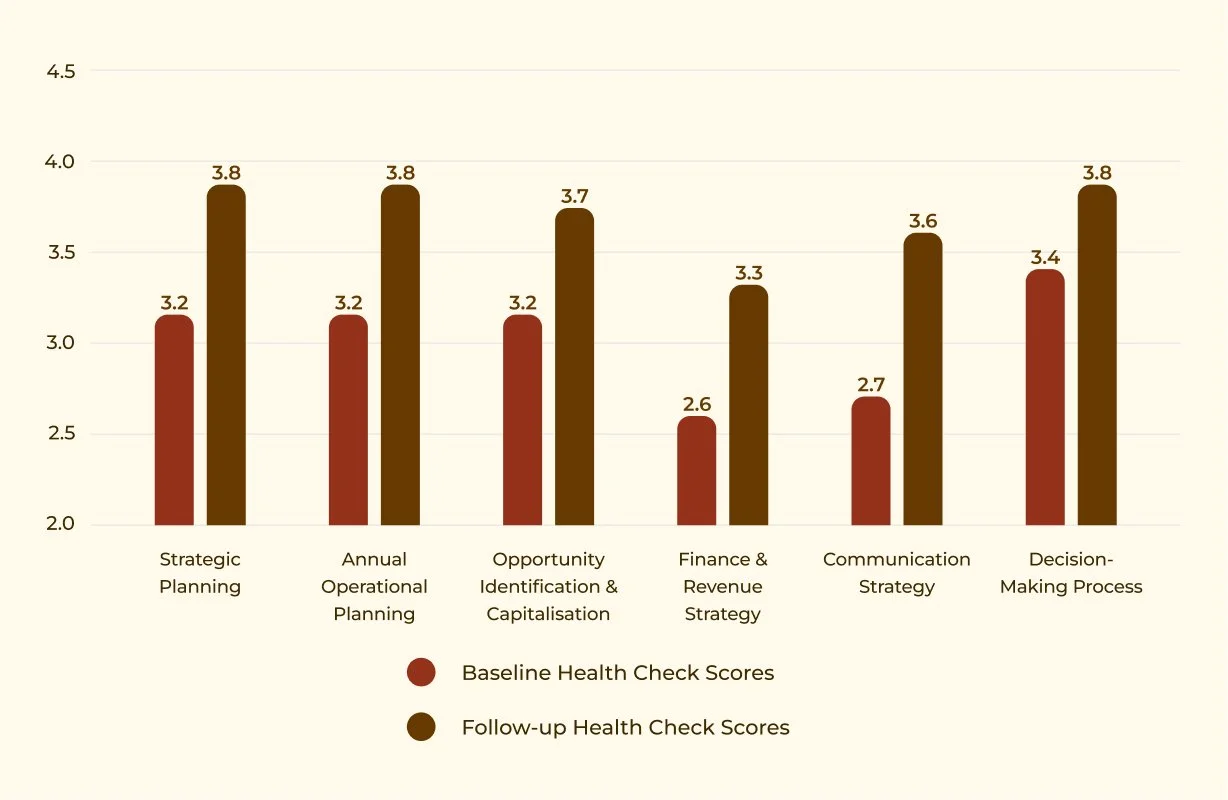
Figure 7: Average Organisational Management Scores.
Key Trends.
Broad and Balanced Gains: All six sub-themes advanced, with increases ranging from +0.5 to +0.7.
Addressing Core Weaknesses: The most substantial improvements were in the two areas that scored lowest in Baseline Health Checks: Finance & Revenue Strategy (+0.7) and Communication Strategy (+0.9). This indicates a targeted effort to overcome fundamental challenges in sustainability and external engagement.
Strengthening Foundational Plans: Strategic Planning and Annual Operational Planning both saw strong gains (+0.6 each), moving organisations from having ideas to having documented, actionable roadmaps.
Sustaining Strength in Process: Decision-Making Process, already the highest-scoring area in Baseline Health Checks, maintained its lead with a +0.4 improvement, indicating further formalisation of good practice.
Overall Leap: The combined average rose from 3.0 to 3.7, marking a significant shift towards more deliberate, structured, and forward-looking organisational leadership.
1. Finance & Revenue Strategy (2.6 to 3.3) & Communication Strategy (2.7 to 3.6).
Baseline Health Checks: These were the two weakest pillars. Finance & Revenue Strategy was characterised by acute dependence on project grants, with many organisations reporting that 90-100% of their income came from them. Diversification was often an aspiration ("exploring," "considering") rather than a plan, and reserves were minimal or non-existent, as captured in the statement: “We are heavily reliant on grants... we are strategising the diversification.” Communication Strategy was frequently informal, reliant on organic social media or word of mouth, with little strategic intent or dedicated capacity, as summarised by one leader: “Communication is very informal and on the go.” A community sports club typified this starting point, with Baseline Health Check scores of 2 in both Finance and Comms, being heavily grant-reliant, with zero reserves, and communicating only through informal networks.
Follow-up Health Checks: A profound shift occurred from acknowledging dependency to actively executing the strategy. Organisations developed concrete plans to diversify revenue streams, including traded services, corporate partnerships, and social investment. Building reserves became a common, tracked objective. In parallel, the Communication Strategy evolved from an afterthought to a strategic tool for fundraising and engagement. The community sports club that scored 2 in both areas developed a formal reserves policy, built £1.4k in reserves, and began exploring paid programmes, while implementing structured social media and stakeholder reporting, achieving Follow-up Health Checks Scores of 3. This dual development is reflected in Follow-up Health Checks insights: “Our finance strategy blends grant funding with earned income through service delivery... We’ve begun setting aside reserves to increase stability,” and “We are recruiting a freelance communications and marketing lead. They’ll help clarify our offer, increase visibility, and better document our impact.”
2. Strategic Planning (3.2 to 3.8) & Annual Operational Planning (3.2 to 3.8).
Baseline Health Checks: Many organisations had strategic ideas or goals, but these were often in the founder's mind or loosely documented. Operational planning was frequently reactive, tied to the ebb and flow of grants, leading to a pervasive "start-stop" cycle that hampered stability, as one organisation noted: “The inconsistency means no time to reflect and plan for the next year.” A small employment CIC exemplified this challenge, operating with Baseline Health Check scores of 1 for both Strategy and Operational Planning, relying solely on opportunistic outreach with no formal plans.
Follow-up Health Checks: There was a marked move towards documented, participatory, and reviewed planning. Organisations conducted structured strategy days, involved boards and stakeholders, and produced formal business or strategic plans. Annual Operational Plans became tools for breaking strategic goals into actionable steps. The employment CIC, which began with a score of 1, developed a clear strategic direction informed by the grant programme, implemented regular planning meetings and a structured advisory group, and documented processes for scaling its platform, achieving Follow-up Health Checks Scores of 4 in both areas. This new rigour is evident: “We developed a new five-year plan with input from our renewed board... guiding decisions around commissioning, income diversification,” and “Our operational plan breaks down activities into achievable steps... reviewed regularly and agreed by directors, allowing us to remain accountable and adaptable.”
3. Opportunity Identification & Capitalisation (3.2 to 3.7) & Decision-Making Process (3.4 to 3.8)
Baseline Health Checks: Opportunity spotting was often network-driven and reactive, summed up by the approach: “We see opportunity and apply. We want to deliver XYZ, but we have to wait and see what opportunities are available.” Decision-making, while often clear in small teams, was rarely documented. A faith-based charity demonstrated this mix, with a Baseline Health Check Score of 2 for Opportunity Identification (reacting to immediate needs) and a Score of 4 for Decision-Making, supported by a clear trustee structure.
Follow-up Health Checks: Opportunity Identification became more strategic and proactive. Organisations started "pipeline" management for grants, actively sought corporate partnerships, and developed products for a market. Decision-making processes were further formalised with documented meetings and clear approval thresholds. The faith-based charity became more proactive, registering with corporate match platforms and developing consultancy offers (Follow-up Health Checks Score: 3 for Opportunity), while maintaining its clear decision-making framework (Follow-up Health Checks Score: 4). This evolution is captured in Follow-up Health Checks examples: “We’re exploring partnerships like with the owner of 10 McDonald’s branches to deliver employer-led training,” and, “Decisions are made by the four directors with youth members feeding in... outcomes are captured in minutes and shared.”
Key insights.
Baseline Health Checks: Strategy was often a list of project ideas waiting for funding. Sustainability was a primary concern. A creative CIC, for instance, was "sporadic" in its work, with a nascent consultancy arm that was "distracted" from.
Follow-up Health Checks: Organisations developed multi-year business plans with diversified income streams, treating grants as one component of a mixed revenue model. The same creative CIC defined four clear income pillars (grants, consultancy, merchandise, and a staffing agency), supported by a growth forecast and a volunteer CFO.
A consistent strength that continued to improve was the strategy's grounding in community need. Follow-up Health Checks narratives show more systematic approaches: annual member surveys, stakeholder consultation days, youth boards, and the use of feedback data to directly shape service priorities and strategic direction.
Many organisations remained founder-driven, but the systems around them professionalised. Founders shifted from being the sole doers to strategic leaders supported by documented plans, delegated decision-making, and formalised advisory boards, enabling more sustainable growth.
The qualitative data repeatedly references the programme as the catalyst for developing business plans, understanding social investment, and gaining the confidence to shift from a charity mindset to a social enterprise mindset.
Persistent Challenges.
Capacity vs. Ambition: The most common barrier to executing sophisticated strategies remained limited human and financial resources. Aspirations for dedicated fundraisers, comms officers, and business development roles often outstrip current means.
The Long Road to Diversification: While strategies are in place, shifting the actual income mix away from grant dependency is a multi-year journey. Early-stage traded income is often modest.
Balancing Mission and Market: Tension persists between the desire to offer free services to marginalised communities and the need to generate sustainable income. Navigating this ethically is a key strategic challenge.
5.6 Programme Management.
Quantitative Overview.
Programme delivery became more community-rooted and intentionally inclusive, shifting from service provision to co-designed, equity-integrated impact models.
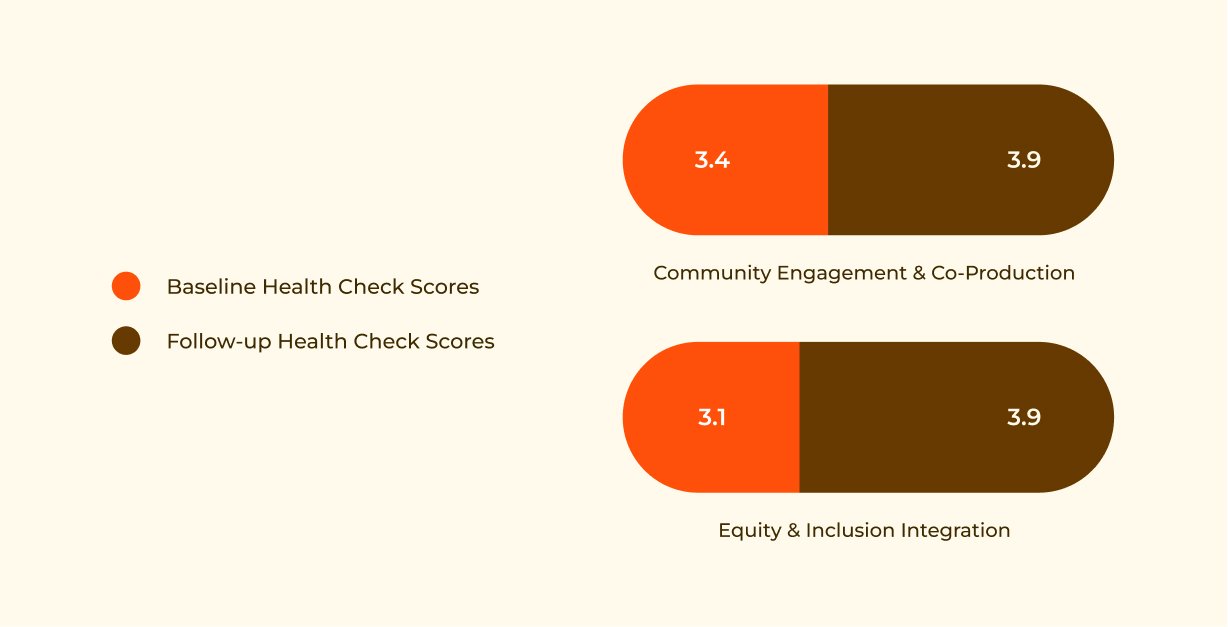
Figure 8: Average Programme Management Scores.
Key Trends.
Substantial Gains in Both Pillars: Community Engagement & Co-Production and Equity & Inclusion Integration saw significant improvements, with increases of 0.5 and 0.8, respectively. The rise in Equity & Inclusion Integration is particularly noteworthy, as it was the lower-scoring of the two pillars in Baseline Health Checks.
Closing the Gap on Equity: The most pronounced improvement was in Equity & Inclusion Integration (+0.8), which moved from a baseline average of 3.1 to 3.9. This indicates a targeted effort to shift from organic or compliance-driven approaches to a systematic, proactive integration of diversity, accessibility, and cultural responsiveness.
Strengthening Participatory Practice: Community Engagement & Co-Production, already a relative strength, advanced from 3.4 to 3.9. This reflects a shift from gathering feedback to embedding co-design and shared decision-making into governance structures.
Overall Convergence on Excellence: The combined average rose from 3.3 to 3.9. In Follow-up Health Checks, the scores for both pillars converged at 3.9, indicating that high performance in community-led design and intentional inclusion became mutually reinforcing and standard practice across the cohort.
Qualitative Analysis.
1. Community Engagement & Co-Production (3.4 to 3.9).
Baseline Health Checks: Engagement mechanisms were wide-ranging but often informal or project-specific. Standard practices included post-event surveys, WhatsApp group check-ins, and open-door policies. While many spoke of being "youth-led" or "community-led," formal structures for this were less common. Feedback was frequently gathered, but its direct, systematic translation into strategic decision-making was less evident. For instance, one youth development CIC scored 3 by utilising surveys and focus groups, but had not yet formalised a youth governance structure. Another organisation noted, “We check in weekly with the dancers... we will be starting a youth leadership programme,” indicating plans for deeper involvement were nascent.
Follow-up Health Checks: The evolution was from consultation to co-production and embedded governance. Organisations formalised advisory roles, with Youth Boards, Community Forums, and Parent Panels becoming standard features. These groups moved from being occasionally consulted to holding regular seats in strategic meetings, directly influencing priorities and programme design. This is exemplified by the youth development CIC, which, in Follow-up Health Checks, established a formal Youth Advisory Board that feeds into management meetings and implemented a structured annual all-member survey to set strategic priorities, thereby elevating its score to 4. Similarly, a community hub that scored 3 in Baseline Health Checks with bi-monthly meetings, created a dedicated monthly Community Forum for open priority-setting and co-designed programmes based on its input.
2. Equity & Inclusion Integration (3.1 to 3.9).
Baseline Health Checks: Approaches to equity were often described as organic ("naturally diverse," "reflecting our community") or driven by funder requirements to collect demographic data. Proactive systems for assessing and integrating needs related to culture, disability, or gender were less common. Some organisations openly identified gaps, with one stating, “We are not sufficiently supporting those with disabilities, and that’s another area we need support with,” scoring a 2. Another scored 1, acknowledging, “We do not have formal systems in place to assess and integrate diversity... it is, however, taken into consideration throughout, informally.”
Follow-up Health Checks: There was a marked shift from assumption to assessment and from access to belonging. Organisations implemented pre-programme needs assessments, trained staff in EDI and trauma-informed policies, and made deliberate adjustments to venues, timing, communication, and content. This is exemplified by three organisations in the cohort:
A youth development CIC introduced mandatory team training on core EDI principles and specific topics such as trans inclusion, driven by community feedback, shifting from reflecting diversity to actively designing for it.
A community hub made a strategic shift in data collection, moving away from intrusive demographic questions unless essential, focusing instead on “citizen participation,” and embedded accessibility checks into all venue bookings.
An employment support CIC developed a tailored support model that proactively assesses and accommodates challenges related to disability, criminal justice history, and cultural background, and actively partners with employers committed to social value.
Inclusion became a design principle, not an add-on, with specific budgets allocated for accessibility and partnerships formed with specialist organisations to fill competency gaps.
Key insights.
At the Baseline Health Check stage, engagement was often a one-way or post-hoc process, collecting opinions after delivery, as seen in the organic, unstructured approach of organisations such as the employment support CIC. Inclusivity was frequently viewed as a natural outcome of serving a diverse community, leading to gaps in disability support and reliance on informal systems.
By the time of the Follow-up Health Checks, engagement had evolved into a strategic governance function. Community representatives transitioned from respondents to co-creators and decision-makers, with formalised roles on boards and advisory panels, as evidenced by the establishment of youth advisory boards and community forums across multiple organisations. Inclusivity shifted from passive reflection to active engineering: organisations now conduct needs assessments, audit venues for accessibility, create alternative communication formats, and invest in staff training to proactively remove barriers and foster genuine belonging.
The tools and systems for engagement also professionalised. While informal channels like WhatsApp groups remained valuable, they were supplemented by structured surveys, dedicated digital platforms, and formal meeting cycles. This ensured community input was captured, analysed, and acted upon transparently, enabling organisations like the employment support CIC to significantly improve their scores.
Persistent Challenges.
Scaling Intimacy: As organisations grow, maintaining the deep, informal connections that characterised their early work becomes challenging. Systematising engagement without losing authenticity is a delicate balance.
Resource for Deep Inclusion: While intent is high, fully resourcing all aspects of inclusion (e.g., hiring specialist support, translating materials into multiple languages, ensuring full physical accessibility) can stretch the capacity of small organisations.
Managing Diverse Voices: Incorporating a wide range of community perspectives into a clear strategic direction requires skilled facilitation and conflict resolution, which remain areas of development for many.
5.7 Programme Performance Management.
Quantitative Overview.
Programme performance management evolved from fragmented, output-focused tracking to integrated systems that support learning, compliance, and continuous improvement. Scores across all five sub-themes rose consistently, reflecting a cohort-wide strengthening of data-driven governance.
Figure 9: Programme Performance Management Scores.
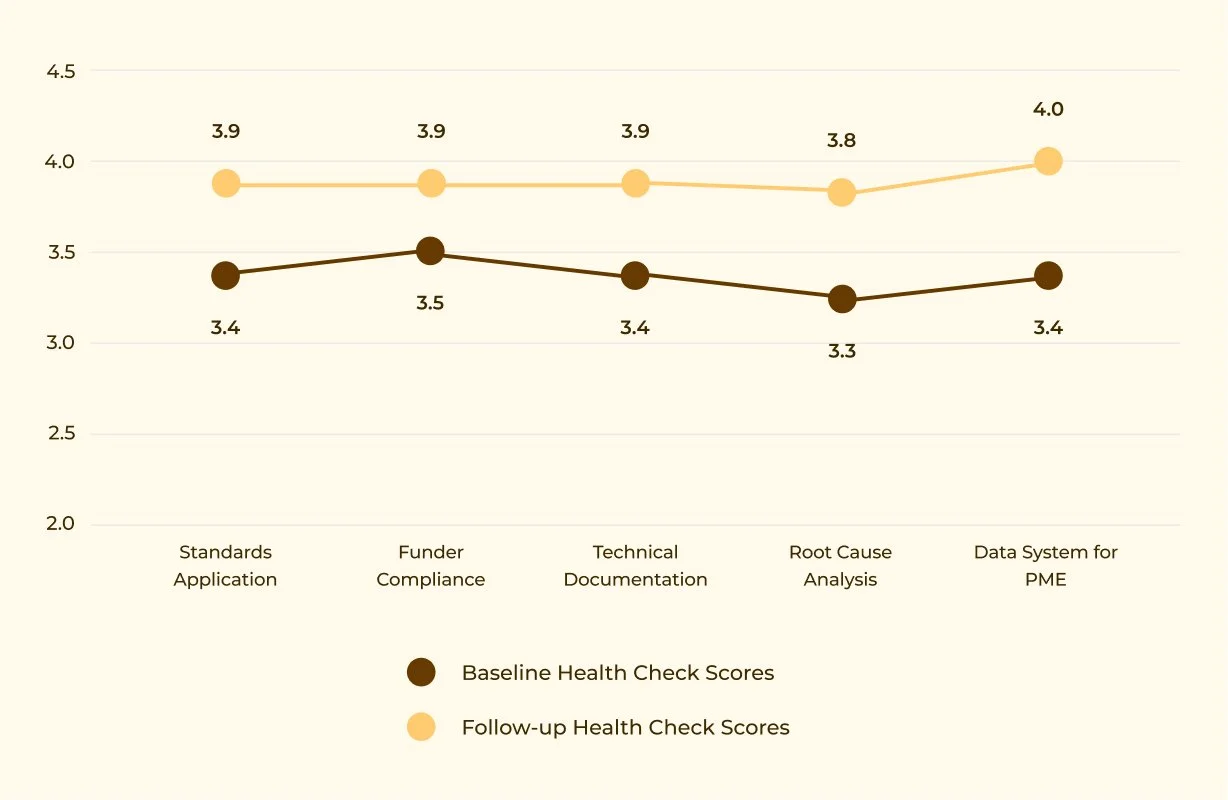
Key Trends.
Universal Improvement: All five sub-themes showed clear gains, with increases ranging from 0.5 to 0.6. The most significant increase was in Data Systems for PME (+0.6), which achieved a perfect average score of 4.0 in Follow-up Health Checks.
Strengthening Analytical Depth: The most significant leap was in the most complex analytical function, Data Systems for PME. Moving from 3.4 to 4.0 indicates a cohort-wide shift from ad hoc data collection to the establishment of reliable, purpose-built systems for planning, monitoring, and evaluation.
Closing Compliance and Analysis Gaps: Root Cause Analysis, the lowest-scoring area in Baseline Health Checks (3.3), saw a significant +0.5 improvement. This indicates that organisations moved beyond simply identifying performance gaps to developing more disciplined processes for investigating and addressing their underlying causes.
High Baseline, Higher Execution: The three pillars concerning Standards Application, Funder Compliance, and Technical Documentation all started from a relatively strong Baseline Health Checks base (between 3.4 and 3.5) and consolidated further, each reaching 3.9 in Follow-up Health Checks. This indicates a refinement and professionalisation of existing good practice.
Overall Convergence on Excellence: The combined average rose from 3.4 to 3.9. The Follow-up Health Checks scores show remarkable consistency, clustering between 3.8 and 4.0, indicating that robust performance management has become an embedded, organisation-wide capability.
Qualitative Analysis.
1. Data Systems for Planning, Monitoring & Evaluation (3.4 to 4.0) & Root Cause Analysis (3.3 to 3.8).
Baseline Health Checks: Data collection was often project-specific, relying on basic tools such as Google Forms, spreadsheets, and paper forms. Systems were described as "manual," "on the go," or "in development." Analysis tended to be superficial, focused on outputs (attendance, feedback scores) for reporting, with limited exploration of why outcomes were achieved or not. One organisation noted having years of unanalysed data, while another described its evaluation as “soft touch.”
Follow-up Health Checks: A transition from fragmented collections to integrated systems. Organisations implemented and mastered dedicated tools: CRMs, project management software, and integrated digital suites. Data collection became automated and routine, feeding into structured review cycles, weekly team check-ins, fortnightly KPI reviews, and monthly programming meetings. This systemic approach enabled genuine Root Cause Analysis. Instead of just noting a drop in attendance, organisations now systematically investigate timings, venue accessibility, content fit, or communication gaps, then test and monitor solutions.
“Our CRM system captures everything... We can quickly generate accurate reports... This data has helped us spot trends.” – Organisation focusing on employment support (Follow-up Health Checks).
“We set simple output and outcome measures at the start... When results fall short, we review the evidence, ask users what got in the way, adjust the plan and record the change.” – Organisation providing community hub services (Follow-up Health Checks).
2. Standards Application (3.4 to 3.9) & Funder Compliance (3.5 to 3.9).
Baseline Health Checks: Adherence to standards was often implicit, based on the founder's experience or sector norms. Funder compliance was seen as a reactive, sometimes burdensome, administrative task centred on deadline-driven report writing. Documentation for funders was compiled at the end of projects, a process described as challenging due to disparate formats and systems.
Follow-up Health Checks: Standards application became explicit and embedded. Organisations proactively aligned delivery with specific safeguarding frameworks, trauma-informed practice, or sector quality marks. Compliance was designed into delivery from the start. Organisations created shared project folders mirroring grant templates, linked financial records directly to budget lines, and built funder-required indicators into their live data trackers. This turned reporting from a retrospective scramble into a by-product of good management.
“We apply recognised standards by embedding safeguarding and trauma-informed practice in delivery, with core onboarding for all staff and additional training for leaders.” – Organisation supporting neurodiverse communities (Follow-up Health Checks).
“For each grant we mirror the funder’s template, keep a running log of deliverables and file supporting proof as we go, rather than at the end.” – Organisation delivering community development projects (Follow-up Health Checks).
3. Technical Documentation (3.4 to 3.9).
Baseline Health Checks: Documentation was often siloed with founders or project managers, involving a mix of digital files, photos, and paper records. The purpose was largely to evidence activities for funders.
Follow-up Health Checks: Documentation evolved into a strategic learning tool. Organisations established centralised, cloud-based documentation hubs. They expanded beyond traditional reports to include reflective logs, video testimonials, case studies, and visual impact summaries (infographics, pictorial newsletters). This richer documentation served dual purposes: meeting accountability requirements and providing qualitative depth for storytelling, planning, and team learning.
“We document as we go, so learning is captured, not lost. After every workshop, the project lead writes a short reflective log...” – Organisation in the youth arts sector (Follow-up Health Checks).
“Our monthly, pictorial newsletter doubles as a public log of delivery and outcomes, so families and stakeholders can see what happened and what changed.” – Organisation providing after-school and holiday programmes (Follow-up Health Checks).
Key insights.
At Baseline Health Checks, performance management was often synonymous with funder reporting, a cyclical and reactive task. Many organisations operated effectively based on the founder’s close community ties and intuitive understanding of what worked, with limited formal systems in place.
By the Follow-up Health Checks, a clear shift toward proactive, internally driven performance management had taken hold. Data systems and regular review cycles enabled organisations to monitor performance in real time, using insights to steer delivery and make adjustments well before formal reports were due. Organisations codified intuitive knowledge into structured systems through documented procedures, routine data collection, and systematic analysis, making effectiveness less person-dependent and more sustainable.
The adoption of new digital tools, such as CRMs and project management software, and the emphasis on building internal data systems were frequently attributed to the capacity building, confidence, and peer learning fostered by the Innovate Now programme. The programme provided the impetus and, at times, direct support to invest in the infrastructure needed for rigorous performance management.
Persistent Challenges.
Capacity for Deep Analysis: While data collection systems are strong, the human capacity for advanced data analysis, interpreting complex trends, and conducting rigorous impact evaluations, remains a constraint for some, often addressed by hiring freelancers or consultants.
Resource for Ideal Systems: Aspirations for more sophisticated evaluation (e.g., calculating social return on investment, longitudinal studies) are sometimes limited by cost and expertise.
Balancing Depth with Burden: The need for comprehensive documentation and data collection must be carefully managed to avoid creating excessive administrative burdens for small delivery teams, which could divert energy from frontline work.
The Capacity-Building Experience.
6.1. The Critical Friend Journey.
At the heart of the Innovate Now programme lies the Critical Friend process, a tailored, action-oriented mentoring engagement designed to bridge the gap between organisational vision and operational reality. This process connected each participant with an accomplished Critical Friend, a mentor selected for their deep expertise and capacity to provide strategic, impartial guidance. Over three structured sessions, founders and leaders worked directly with these experts to unpack challenges, stress-test plans, and clarify growth pathways. This was not merely advisory but a strategic partnership built on trust, candour, and a shared commitment to resilience and scalability.
The process aimed to equip organisations with tangible outcomes: a funder-ready business plan, enhanced strategic clarity around revenue diversification and impact measurement, improved financial and operational literacy, and increased leadership confidence. Each cohort followed the same three-phase journey, adapted to individual needs but consistent in its developmental arc.
Below are the professional bios of the Critical Friends who were engaged:
Critical Friend A, who brings 17 years of experience in healthcare, higher education, and international development across the UK, USA, Trinidad, and the Gambia. Her doctoral and ongoing research focuses on entrepreneurship, leadership, and equality, diversity and inclusion, ensuring her mentorship is grounded in both contemporary academic insight and real-world sectoral knowledge.
Critical Friend B, is an enterprise education specialist with a doctorate in Enterprise Education and over a decade of experience designing and leading entrepreneurship programmes in higher education. Named Enterprise Champion by NACUE and recognised by the Peter Jones Foundation, she combines academic rigour with a proven track record in practical enterprise support.
Critical Friend C, is an accredited coach, mentor, and business advisor with extensive commercial and training experience. She delivers accredited entrepreneurship training at institutions including Ravensbourne and Cranfield University, applying methodological frameworks to simultaneously advance business development and the personal growth of leaders.
Session 1: Diagnostic & Foundation.
Mentors and mentees established a shared understanding of the organisation’s mission, model, and immediate challenges. A recurring theme was the pressing need to diversify beyond grant funding, with many organisations aiming to shift from over 70% of income from grants to earned revenue. Using tools like the Business Model Canvas, mentors helped clarify value propositions, customer segments, and revenue streams, often illuminating gaps between beneficiaries and paying customers. Foundational issues of governance, team capacity, and legal structure were also surfaced, with several organisations beginning to explore structural transitions (e.g., CIC to CIO) to access wider funding.
Session 2: Deep Dive into Implementation.
The conversation moved from strategy to action, focusing on financial forecasting, sales planning, and operational scaling. Mentors worked closely with leaders to build realistic cash flow projections, often addressing gaps in financial literacy around VAT, cost structures, and scenario planning. Simultaneously, organisations developed pragmatic sales and marketing strategies, defined ideal customer profiles, and began piloting new income streams. This phase frequently revealed capacity gaps, prompting discussions about investing in CRM systems, strategic hiring, and operational scaling.
Session 3: Consolidation & Approval.
The final session centred on reviewing and refining the completed business plan. Mentors conducted rigorous assessments of financial integration, market fit, and scalability. Over 85% of organisations received formal mentor approval, with many plans incorporating forward-looking elements such as impact measurement frameworks, succession planning, and investment pathways. Beyond plan approval, this session solidified strategic confidence, with many mentees reflecting that they “ended up with a much better idea than when they started.” Mentors often facilitated connections to wider networks or funders, ensuring continued momentum beyond the programme.
Feedback across Rounds 1–3 consistently highlighted the transformative value of the Critical Friend model. Despite scaling and iterative design, participants in all cohorts reported similar gains in strategic clarity, financial confidence, and operational readiness. This consistency underscores the programme’s mature, reliable approach to capacity building and its success in fostering both organisational resilience and leadership growth.
6.2 Thematic Learnings from Workshops and Sessions.
Direct participant feedback from the programme’s core capacity-building workshops reveals not only what was learned, but how that learning transformed strategic thinking and operational approaches. Moving beyond knowledge transfer, the workshops catalysed a fundamental mindset shift, from operating as project-driven charities to building resilient, strategic social enterprises. The following analysis is structured around the primary learning modules, highlighting the central “a-ha” moments and their subsequent impact on organisational practice.
Business Viability Assessment & Business Modelling equipped leaders with frameworks to critically examine and articulate their organisational engine. The primary learning was shifting from viewing a business model as a static description to understanding it as a dynamic, testable hypothesis for creating, delivering, and capturing value. For many, the workshop demystified the concept, providing a “clearer definition/example of a business model” and clarifying the “different functions/uses of the business model canvas.”
A recurring insight was the critical need to precisely define the value proposition, drilling down into core questions: “What problem are you trying to solve?” and “Who are you solving it for?” Participants internalised that the Business Model Canvas is not a one-time exercise but a living tool for ongoing adaptation, helping them “test ideas, challenge assumptions and adapt over time.” This module provided the strategic lens through which subsequent decisions were viewed, enabling organisations to move toward models such as paid subscriptions and align teams around a clearer vision.
Systems and Processes addressed the often-overlooked backbone of organisational growth. The core learning is centred on moving from founder-dependent agility to creating reproducible systems that ensure consistency, efficiency, and scalability. Participants grasped that “sustainability means that not everything is dependent on the founder’s efforts,” crystallised by the reflective question: “If you left, what would be left?”
Leaders learned to bridge strategy and execution, focusing on the “backstage” elements of the Business Model Canvas, key activities, resources, and partnerships required to deliver value reliably. Recognising that intentional process design is a strategic investment, they saw that “proper processes can decrease company outgoings, streamline workload, [and] increase reach.” For some, this prompted formalisation efforts; for others, it reinforced the need to prioritise getting “our financial systems and processes in order as this is the issue that’s having the biggest impact.” The module shifted systems work from an afterthought to a core leadership responsibility.
Financial Management shifted participants’ relationship with their finances from compliance and retrospective tracking to proactive stewardship and forward-looking strategy. A central learning was that financial documents tell the story of an organisation’s priorities: “Numbers tell a story, make sure the story you are telling is backed up by the numbers you’re sharing.”
The imperative of regular review was emphasised: “if you don’t have a budget/ forecast in place, you can misallocate your resources, waste time and fail to achieve business goals.” Leaders also linked financial health to sustainability, exploring the “Pros & Cons of employees vs contractors” and the “importance of systemising/automating processes to drive long-term sustainability.” This learning empowered participants to implement “consistent and correct recording of all financial transactions” and use “financial forecasting for organisational sustainability,” aligning financial practices more closely with their mission.
Fundraising, Social Investment & Income Diversification empowered organisations to rethink their funding mix, moving from grant-dependency to a sophisticated understanding of a blended financial landscape. A fundamental shift was adopting a partnership mindset, recognising that “Businesses are not donating; they are investing in a partnership that benefits both parties,” and that “Social Investors offer more than just financing.”
Participants learned the importance of targeted outreach and research “pre-pitching to ensure alignment with your skillset and mission,” often using tools like annual reports and aligning with frameworks such as ESG and the UN SDGs. Clarity on capital types helped distinguish grants from repayable social investment, understanding that “investment must go towards aspects of the business that will grow revenue.” This expanded strategic options, enabling organisations to “develop a range of pitch decks with varying risk parameters” and “clearly articulate our mission, vision, and impact with a well-prepared pitch.”
A Cohesive Journey Towards Professionalisation emerged from these interconnected modules. The business model provided the strategic map; systems and processes built the operational vehicle; financial management supplied the fuel gauge and navigation; and funding modules opened new routes. Collectively, they enabled Black-led social enterprises to professionalise their operations, not by diluting their mission, but by building the resilient, strategic infrastructure needed to deliver it sustainably and at greater scale. The “a-ha” moments captured in participant feedback testify to the cohort’s development of a more confident, strategic, and sustainable approach to creating lasting community impact.
6.3 Participant Feedback: The Most Valuable Components.
Direct feedback from participants across all three Innovate Now cohorts reveals a consistent pattern, affirming the model's reliable delivery of high-impact support. Five core themes emerge across all cohorts: the transformative power of community; the critical role of structured business planning; the exceptional value of tailored mentorship; the practical relevance of training; and the appreciation for a flexible, trust-based model.
The Transformative Power of Community and Peer Support.
Across all three cohorts, participants consistently emphasised the profound value of belonging to a supportive, like-minded community. This sense of belonging reduced the isolation often felt by founders and created a space for mutual learning and encouragement. Participants described the experience as "a lovely experience connecting and being part of an amazing community" and noted the "good energy, great people." This peer learning extended beyond reassurance into a practical strategy. One leader highlighted how "hearing others' challenges helps me feel less isolated, while the open discussions often surface questions or ideas I hadn't considered," underscoring the cohort as a dynamic think-tank. Another specifically praised the programme's "focus on peer learning and creating space for Black-led organisations to connect and grow."
Structured Tools for Strategic Clarity and Direction.
The introduction of structured strategic tools, especially the Business Model Canvas, was repeatedly cited as a turning point. Participants reported these tools "gave me the time and space to reflect and focus" and were instrumental in "building stronger strategic direction." For several, it fundamentally altered their engagement with the funding landscape, making them "more open to exploring partnerships and social investment routes." This strategic scaffolding had a profound impact on leadership mindset. One participant shared that the programme facilitated a shift from day-to-day survival to long-term visioning, noting it was "the only funder that helped me truly understand what growth means." Another leader reflected it was "literally the missing piece for my jigsaw," enabling them to "structure my company in a way that it operates more like a business."
Exceptional Value of Tailored One-to-One Critical Friend Sessions.
The Critical Friend sessions emerged as the most frequently and passionately praised element. Participants consistently described these one-to-one meetings as "incredibly valuable," "transformational," and "priceless." Leaders highlighted how Critical Friends provided "fresh perspective and constructive feedback" and "challenged me to think outside the box" with probing questions that identified blind spots. The impact of this personalised mentorship was clear in final feedback, where leaders credited the sessions for offering the "unbiased perspective" needed to "refine our business case and think more clearly." The near-universal acclaim underscores the critical importance of trust-based mentorship in translating workshop learning into actionable organisational development
Practical, Applicable Training in Finance, Systems, and Sustainability.
Workshops focusing on financial management, systems, and income diversification were highlighted for their direct relevance. Participants reported gaining "a much stronger foundation to build corporate partnerships" and a "better understanding of financial management and corporate sponsorship." The training helped demystify complex topics, equipping leaders to "run your social enterprise like a business." This practical learning addressed a critical need for professionalisation, empowering leaders with the knowledge to build more resilient financial and operational models. The impact was tangible, with one participant noting the training "strengthened the organisation and will likely contribute to its growth."
Flexible, Responsive, and Supportive Programme Delivery.
The programme's delivery model, combining evening workshops, recorded sessions, and responsive support, was widely appreciated for its ability to accommodate the demanding realities of social enterprise leaders. The supportive role of the DiNN team was a consistent highlight across all cohorts, with participants frequently singling out team members for their "patience," "warmth," and "professionalism."
This approach was described as a welcome contrast to more transactional funding relationships. Participants valued the "clear and manageable" process, noting it felt less intensive than that of other funders. Many emphasised the "safe space" created, where they felt respected and encouraged to be honest about challenges. The relational, trust-based ethos was repeatedly mentioned as a key factor in engagement, with one leader summarising the support as feeling "like a big hug" rather than a hands-off grant. In INR3, one participant reflected, "You have smashed it at keeping us engaged online!" This consistent appreciation across rounds indicates that the programme maintained a high standard of facilitative leadership and participant care throughout its evolution, fostering an environment where learning and vulnerability could flourish.
Participant Suggestions for Enhancement.
Participants across cohorts offered constructive ideas for the evolution of future support, reflecting their deep engagement and investment in the model's success.
Deepening Connection through Hybrid Delivery: Several leaders expressed a desire for more in-person or hybrid elements to complement the online core, suggesting this would "create a different energy and stronger connections" and significantly deepen networking, collaboration, and peer accountability.
Enhancing Accessibility and Planning: Requests were made for clearer, consolidated communications, such as a central programme calendar and regular opportunity digests, to help busy leaders plan and avoid missing key information. Additionally, advance notice and recordings for all sessions were highlighted as essential for ensuring access around complex schedules.
Streamlining Administrative Processes: Some feedback highlighted opportunities to streamline administrative and due diligence processes where possible, with suggestions to ensure scrutiny is proportionate. The goal articulated was to maintain rigour while reducing the burden on small, resource-tight teams.
Building Bridges to Ongoing Support: Participants valued explicit post-programme pathways, such as light-touch check-ins, alumni networks, or clear guidance on re-application. This would help sustain momentum and provide a continued touchpoint within the DiNN ecosystem, supporting long-term sustainability beyond the grant period.
These suggestions provided a valuable roadmap for continuous improvement and were actively incorporated into the programme's design as it progressed through later cohorts.
6.4 Voices from the Cohort: Illustrative Impact Narratives.
This section presents qualitative narratives from five participants, providing human-centred insight into how capacity building was experienced and translated into action. The stories reflect the diversity of the cohort and collectively illustrate key programme themes: building strategic resilience, professionalising lived-experience leadership, and creating pathways to sustainable impact.
6.4.1 Ademola Adeyeba - Unlocking the Potential of Black Boys and Young Men.
Ademola Adeyeba, the CEO and founder of 1000 Black Boys CIC, begins with a stark reality: in London, over a five-year period, 70% of teenagers killed were Black boys. That alarming statistic became the catalyst for his mission: to inspire Black boys and young men ages 10 to 25 to unleash their potential and live purposeful lives. In a world that can feel unjust and limiting, 1000 Black Boys CIC works to guide these young people toward their goals and dreams. They focus on building resilience, confidence, and a sense of purpose. To make this mission tangible, the organisation is built on five pillars: events, mentorship programmes, mental wellbeing support, a TV show, and a planned digital platform. Ademola first connected with Do it Now Now in 2021. The partnership began with an online coaching session for their community, and Ademola was struck by the urgency embedded in the name "Do it Now Now". More recently, with funding support, they delivered five mentorship cohorts, transforming young participants from unsure and hesitant to confident speakers. "With their funding, we've been able to deliver... five different cohorts. The youngest person in our programme was 8 years old, and the oldest was 22. And we couldn't have done that in that way without Do it Now Now's support." For Ademola, Do it Now Now matters because they deliberately seek out and support Black-led organisations like his, providing not just financial backing, but validation, community, and a pathway to greater impact.
6.4.2 Kianu Glasgow - Empowering Young Leaders Through Co-Creation.
Kianu Glasgow is a social entrepreneur, consultant, and co-founder of Dipped in Creativity Engagement (DICE) CIC. At the heart of DICE is genuine co-production: giving young people from Black and global majority communities the tools and platform to lead initiatives themselves. Kianu's work focuses on investing in people and communities through programme design, workshops, coaching, and mentoring. He first partnered with Do it Now Now in 2023 through their Voltage programme, where young people developed business ideas for DICE. Since then, Kianu has also become a grantee under the Innovate Now programme. "Do it Now Now matters because they're not only just a funder, but they're also a community pillar that is bringing organisations, particularly Black-led organisations, together." The impact on DICE has been profound, shifting the team's focus from running projects to building sustainable income streams and long-term organisational health. Through this partnership, Kianu has grown as a co-founder, and his entire team has gained valuable skills and connections.
6.4.3 Derrick Twum - Preventing Youth Crime Through Empowerment.
Derrick Twum, founder of MEM Academy CIC, speaks from personal experience. Having been incarcerated as a youth, he now dedicates his work to preventing young people from making the same mistakes and entering the criminal justice system. MEM Academy reduces barriers to opportunity for Black and other global majority individuals, especially ex-offenders and at-risk youth, by providing training, mentorship, and support for self-employment. Derrick discovered Do it Now Now online and describes the engagement as overwhelmingly positive. They helped strengthen MEM Academy's trading income and supported their fundraising journey, including securing social investment and match funding. "Do it Now Now has supported us in basically [our] fundraising journey... Think our goal was to raise 50,000, but with Do it Now Now, we got an extra 20,000 on top." For Derrick, Do it Now Now matters because they fill a critical gap in the entrepreneurial landscape, connecting organisations like his to the right people, programmes, and opportunities.
6.4.4 Katrina Ffrench - Fighting for Justice and Systemic Change.
Katrina Ffrench is the founding director of UNJUST CIC, a not-for-profit on a mission to eradicate discriminatory culture, policies, and practices within policing and the criminal legal system. Their vision is transformational, systemic change that ensures equitable treatment for Black, Asian, and racialised communities. She first met the founder of Do it Now Now during a panel discussion in early 2025. That connection led to UNJUST applying for and receiving grant funding, as well as participating in capacity-building programmes designed to help scale the organisation. "Do it Now Now matters because... It's still shocking that Black racialised organisations don't have access to funding in the same ways as their white counterparts. So having an organisation such as Do It Now Now... enables funding to flow much more easily." In the 21st century, racialised organisations still face significant barriers to funding compared to their white counterparts. Do it Now Now bridges that gap, providing capacity-building and creating networking opportunities that enable Black-led organisations not just to exist but to flourish.
6.4.5 Jessica Agboola - Closing the Gap for Black Women in Higher Education.
Jessica Agboola is a social researcher and social entrepreneur on a mission to transform higher education for Black women. As the founder of KINSIS CIC, she is committed to holistically developing Black female student leaders to "be well, do well, and lead well", starting with their university experience. Her work addresses the persistent Ethnicity Awarding Gap. Jessica's journey with Do it Now Now began shortly after she finished university. As an eager but inexperienced social entrepreneur, she sought guidance to turn her research into a viable organisation. That's when she discovered the Black and Good programme, an intensive crash-course experience in social enterprise. That programme gave her the practical tools and confidence to move from idea to action. "Do it Now Now matters because they are taking bets on businesses and people that the sector otherwise wouldn't bet on... The investment has been financial, but also much more comprehensive than that. It has been holistic in nature." The impact on KINSIS has been both financial and transformational, enabling Jessica and her team to scale their work and deepen their impact.
These narratives illustrate the human dimension of the programme’s impact, giving voice and texture to the quantitative and thematic findings presented throughout this report. Together, they affirm how Innovate Now’s integrated model enabled Black-led organisations to build resilience, amplify influence, and deepen community impact.
Summary of Programme Impact and Key Learnings
7.1 Summary of Programme Impact and Key Learnings
The Innovate Now programme has successfully delivered on its ambitious mission to strengthen Black-led charities and social enterprises at a critical growth stage. As a targeted Level 3 intervention, it provided not only essential grant funding but also a comprehensive capacity-building package that addressed the foundational gaps hindering sustainable scale. The evidence of impact is clear, consistent, and multifaceted.
Demonstrable Organisational Transformation: The pre- and post-programme data reveal substantial "distance travelled" by the funded organisations. Health Check scores showed marked improvement across all seven thematic areas, with an average increase from 3.3 to 3.9. The most significant gains were in Administration (+0.6), Financial Management (+0.6), and Programme Performance Management (+0.5), indicating a cohort-wide shift from informal, reactive operations to professionalised, system-supported management. This internal strengthening directly enabled external growth: 62% of organisations expanded their teams, and 83% reported increased community impact within six months.
Building Strategic and Resilient Leadership: The programme catalysed a profound shift in leadership mindset, from founders managing day-to-day survival to strategic leaders building sustainable enterprises. Confidence in complex processes such as mergers and hiring increased dramatically, while over half of leaders moved from awareness of equity issues to actively designing new DEI policies and practices. The unparalleled value placed on the Critical Friend sessions underscores the pivotal role of tailored, trust-based mentorship in translating strategic frameworks into actionable, context-specific plans.
Fostering Ecosystem Connectivity and Influence: Innovate Now successfully countered the isolation often experienced by Black-led organisations. It cultivated a powerful peer community that provided mutual support and learning. Furthermore, it strategically expanded participants’ networks: over 90% of leaders formed new partnerships post-programme, with a deliberate focus on alliances that advance racial equity. This was accompanied by a surge in confidence to engage with institutional power, moving organisations from having peripheral access to becoming confident, strategic partners capable of shaping policy and resource flows.
Key Programme Learnings: The iterative and responsive design of Innovate Now between Rounds 1, 2, and 3 yielded critical operational insights:
The Power of Integrated Support: The model of combining unrestricted grants with bespoke capacity building, peer learning, and one-to-one mentorship proved transformative. Funding alone is insufficient; strategic accompaniment is essential for sustainable growth.
Adaptability Unlocks Inclusion: The proactive development of the Fiscal Hosting mechanism in response to rigid funding criteria underscores the importance of mission-aligned flexibility. It allowed high-impact organisations to participate without compromising compliance, widening the programme’s reach and equity.
Data as a Diagnostic and Developmental Tool: The evolution of the Health Check from a simple filter to a core longitudinal evaluation instrument provided a rigorous, evidence-based method to track progress, personalise support, and demonstrate impact.
Centring Lived Experience and Intersectionality: Acknowledging that Black-led organisations are not a monolith and that leaders often navigate multiple, overlapping marginalisations enabled more nuanced support and surfaced deeper systemic barriers, enriching the programme’s design and advocacy.
7.2 Addressing Structural and Intersectional Challenges.
Beyond the direct impact on the cohort, Innovate Now served as a vital lens into the structural inequities of the funding landscape. Participants' experiences highlight persistent, systemic barriers that require dedicated, sector-wide attention.
1. The "Missing Middle" Funding Gap: The programme confirmed the acute lack of tailored support for organisations with incomes between £30,000 and £150,000. These entities are too established for start-up grants yet too small or perceived as too risky for mainstream social investment or large-scale contracts. This gap stifles the maturation of a resilient Black-led social enterprise sector.
2. The Compliance-Burden Mismatch: The rigorous Due Diligence process, while necessary, highlighted a recurring tension. Small, community-rooted organisations are often expected to demonstrate governance and compliance frameworks commensurate with far larger, more resourced entities. This creates a disproportionate administrative burden that diverts limited capacity from mission delivery and strategic development.
3. Intersectional Barriers Compound Exclusion: The cohort profile revealed that organisations led by individuals with multiple marginalised identities, particularly Black women, disabled leaders, and LGBTQ+ individuals, face compounded challenges. These include heightened scrutiny from funders, greater difficulty accessing networks of power, and the added emotional labour of navigating systemic bias while leading and delivering services.
4. The Tyranny of Project Funding: A pervasive theme was the destabilising cycle of short-term, restricted grants. This "project funding trap" forces organisations to pivot constantly to funder priorities, hinders long-term strategic planning, prevents investment in core infrastructure (like CRMs or HR systems), and makes building operational reserves, a key indicator of health, exceptionally difficult.
5. The Trust and Power Deficit: Participant narratives consistently spoke to a fundamental lack of trust from mainstream funders. The deep, community-embedded knowledge and lived experience of Black leaders are often undervalued relative to formalised sector credentials or traditional business metrics. Innovate Now’s trust-based, relational approach stood in stark contrast and was cited as a key enabler of honest reflection and bold innovation.
7.3 Strategic Recommendations.
The evidence and insights gathered throughout the Innovate Now programme provide a compelling foundation for strategic evolution. To build upon this success and meaningfully address the systemic barriers identified, we urge the City Bridge Foundation to champion the following pathways, transforming proven approaches into sustained sector-wide practice.
1. Formalise and fund a full "Continuum of Support" model.
The transformative impact of Innovate Now on our 'missing middle' cohort (Section 2.5, 2.8) proves the value of stage-specific support. To prevent organisations from stalling after such an intensive intervention, funders should invest in a clearly defined and funded pathway, from early-stage incubation through to scale and investment readiness. This will systematically build a resilient pipeline of Black-led social enterprises, ensuring they receive the specific capital and capacity-building needed at each critical growth juncture for long-term impact.
2. Institutionalise long-term, unrestricted core funding as the standard.
Our analysis revealed the pervasive 'project funding trap' as a primary structural barrier to sustainability (Section 7.2). Conversely, the cohort's significant gains in financial management and strategic planning (Sections 5.4, 5.5) were enabled by flexible, trust-based funding. To truly break the cycle of fragility, funders should champion multi-year unrestricted grants as the default. This provides the stability for leaders to invest confidently in their teams, systems, and reserves, the very foundations that allow mission, not funding cycles, to dictate strategy.
3. Embed greater flexibility and innovation directly into funding practices.
The proactive development of the Fiscal Hosting mechanism (Section 2.2) was a critical adaptation that widened access and equity in later rounds, directly responding to rigid structural barriers. Furthermore, participant feedback highlighted the burden of disproportionate administrative processes (Section 6.3). Funders should adopt and promote such flexible mechanisms, critically review eligibility criteria for unintended exclusion, and simplify processes proportionately. This ensures resources flow to organisations based on their community impact and potential, not merely their pre-existing capacity to navigate complex bureaucracy.
4. Invest strategically in the ecosystem infrastructure that surrounds Black-led social enterprise.
Participants consistently placed unparalleled value on the peer community and reduced isolation fostered by the programme (Section 6.3). This was directly linked to their ability to form high-quality, equity-focused partnerships (Section 4.3). Direct grant-making should therefore be complemented by funding robust peer networks, specialist technical assistance, and collaborative platforms that are by and for the community. Strengthening this intermediary layer provides ongoing support beyond individual grant cycles, fosters vital collaboration, and amplifies the sector’s collective voice and influence.
5. Adopt an explicit intersectional lens in all strategy design and evaluation.
Our cohort profile highlighted that 'Black-led' is not a monolith, with many leaders navigating multiple marginalised identities (Sections 2.1, 2.10). Broader learnings confirmed these intersecting identities compound barriers to access and success (Section 7.2). To ensure equitable impact, Funders must mandate the collection and analysis of disaggregated data across their portfolio. This will illuminate specific challenges and tailor support to ensure the most equitable outcomes for organisations led by Black women, disabled leaders, LGBTQ+ individuals, and others across the community.
6. Leverage City Bridge Foundation's influence as a convener and advocate for sector-wide systemic change.
The programme consistently surfaced evidence of deep structural barriers, from disproportionate compliance burdens to a pervasive trust deficit in traditional funding landscapes (Section 7.2). Yet, post-programme, our cohort showed a marked readiness to engage with and influence institutional power (Section 4.3). These barriers require collective action. By sharing the powerful evidence from this report, CBF can lead conversations with other major funders, investors, and policymakers to harmonise reporting, increase risk appetite, and reform policies. Lasting change depends on shifting the norms and power dynamics of the wider funding landscape, a mission where CBFI's leadership is now more vital than ever.
Closing Reflection
The Innovate Now programme stands as a powerful testament to what is possible when funding is combined with deep trust, strategic accompaniment, and a commitment to addressing power imbalances. The organisations supported are now more resilient, more strategic, and better connected. They are not only delivering greater impact in their communities but are also better equipped to lead, advocate, and shape their own futures.
The journey does not end here. The call to action is clear: to move from a successful pilot to a transformed ecosystem. By adopting these recommendations, the City Bridge Foundation can build on Do it Now Now's legacy, championing a new standard for equitable funding that truly unlocks the vast potential of Black-led social enterprise for the long-term benefit of London’s communities.
Join DiNN Community
DiNN Community is a safe and intentional online platform available to all Black individuals and leaders wanting to access resources, network, and share research and lived experiences.

Get in touch with Ozias for more
information
Want to get more involved, ask a question, or share some ideas? Feel free to get in touch.