
From Participant To Partner: the Journey Of Carib Eats
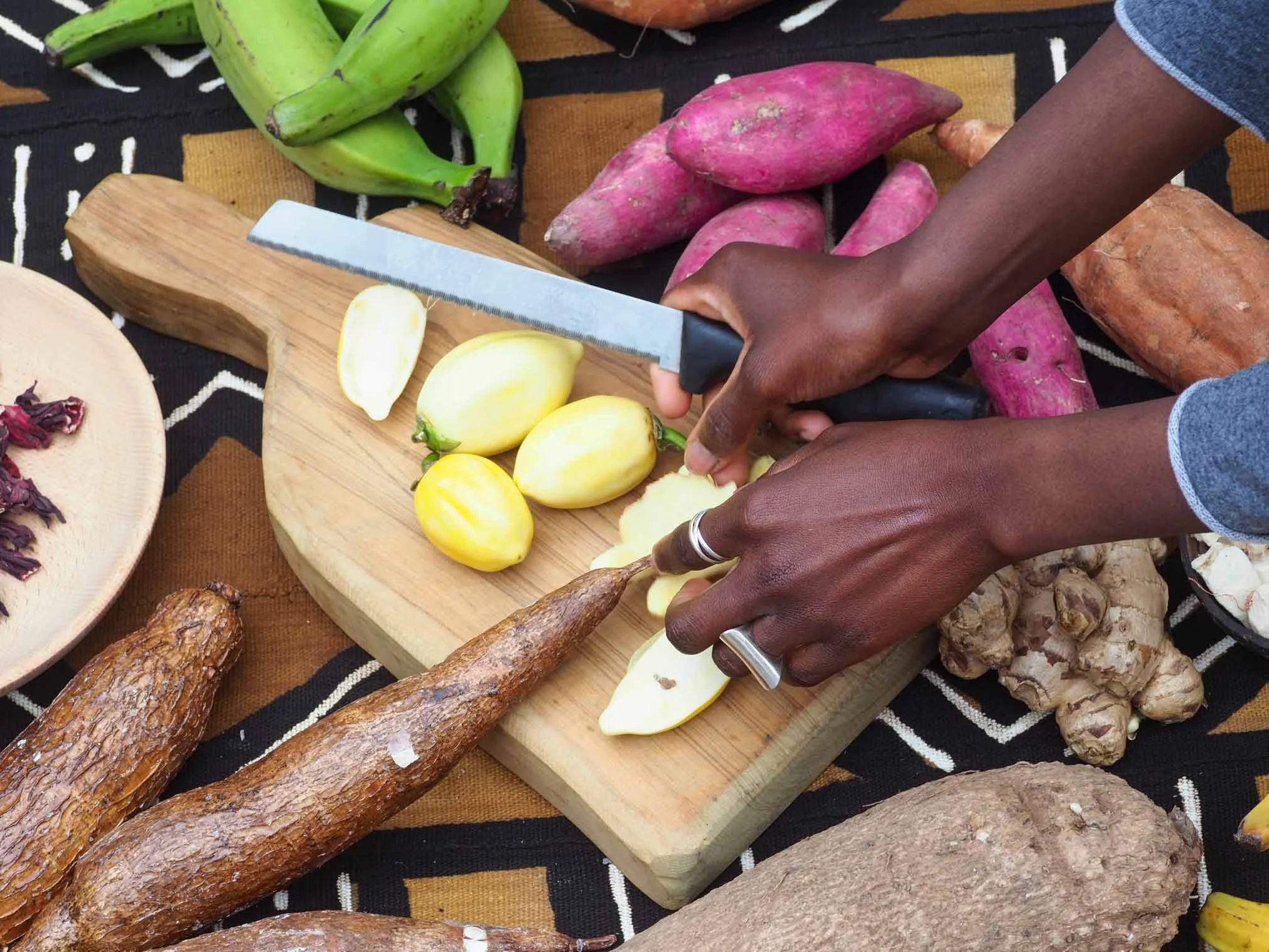
When Ali Kakande joined DiNN’s Level 2 Build Hustle Grow programme in 2025, her organisation, Carib Eats, was already a beloved presence in Hackney.
What had started as a WhatsApp group during the COVID lockdown had grown into a weekly community canteen, a food programme, and a cultural space. But it was running on goodwill, short‑term grants, and sheer determination.
“I’ve been learning on the go, juggling delivery, fundraising, and leadership,” Ali said. “This work is personal, it’s legacy work. And now I’m ready to grow it with the right support.”
A health check at the start of the programme revealed a familiar pattern for grassroots organisations: a powerful mission, but weak infrastructure. Governance was informal and founder‑dependent, with no succession plan and a board whose role was not clearly defined. Policies existed but were often created reactively in response to a funder's request, rather than as part of a planned framework. Most of the team were volunteers or freelancers; there were no permanent staff, no formal job descriptions, and no performance or development systems. Bookkeeping was done in spreadsheets, reserves were minimal, and budgeting was handled project‑by‑project rather than strategically. Ali had built a strong reputation. Local authorities often approached her, not the other way round. There was no strategic plan, no annual operational plan, and no clear financial strategy beyond “find the next grant.” And while Ali could tell a powerful story of impact, she had no systematic way to collect data, track outcomes, or use evidence to improve delivery.
Ali’s own words captured the core problem:
“We don’t need more ideas, we need help turning what’s already working into something sustainable, strategic, and income‑generating.”
The programme provided exactly that. Cohort training sessions covered business modelling, financial planning, and digital marketing. But the most transformative element was the one‑to‑one Critical Friend support.
In the first session, Ali and her Critical Friend worked through the health check findings and co‑created a detailed action plan. They looked at governance, exploring alternative structures and clarifying director roles. They tackled administration by committing to systematically documenting policies and strengthening the organisation’s use of shared digital tools. They planned for human resources, moving from an entirely volunteer‑led model to hiring at least one paid operations role to reduce founder dependency. They rebuilt financial management by developing a sustainable fundraising plan, building a pipeline of prospective funders, and strengthening financial reporting. They created a framework for organisational management, a three- to five-year strategic plan, a deliberate shift from reactive to proactive partnership building, and a clear strategy to diversify income beyond grants. And they redesigned programme performance, introducing structured monitoring and evaluation so that impact could be measured, not just described.
By the second session, the changes were already visible. Ali had secured a £12.5k Black Global Majority Infrastructure grant and an 18‑month Hackney Public Health grant for a fitness and mobility programme for elders. She piloted a two‑day‑a‑week activation with Camden Council, using a donated kitchen, and began work on a major six‑month project. Islington and Hackney councils became active partners. Beyond catering, she started packaging her expertise into personal consultancy offers, public speaking, online sessions, digital products, and one‑to‑one consulting. She even began developing a personal brand and website to support this new income stream. Internally, she started formalising processes, planning for an operations role, and building a proper funders pipeline.
“I had some hesitation going in because the word ‘critical’ made me expect something harsh,” Ali reflected. “But the experience was the complete opposite. It felt like a safe, empowering space to explore ideas and direction.”
The support did not end with the programme. Ali’s growth enabled her to give back. She returned as a collaborating organisation for a Level 1 programme, helping to deliver training and support to new entrants. And in 2025, she joined DiNN’s Advisory Board, bringing her lived experience and hard‑won operational knowledge to shape the organisation’s strategic direction.
Ali’s journey is not an exception. It is a model of wrap‑around ecosystem support: a Level 2 programme to build capacity; Critical Friend support to turn gaps into action; ongoing community and networks to open doors; and a return pathway to become a collaborator and advisor.
“Carib Eats is my love letter to the community,” Ali says. “I know what it’s like to feel unseen, and I’m passionate about creating spaces where people feel valued, nourished, and connected.”
Now, she is helping us create those same spaces for others.